
Visa and immigration policy

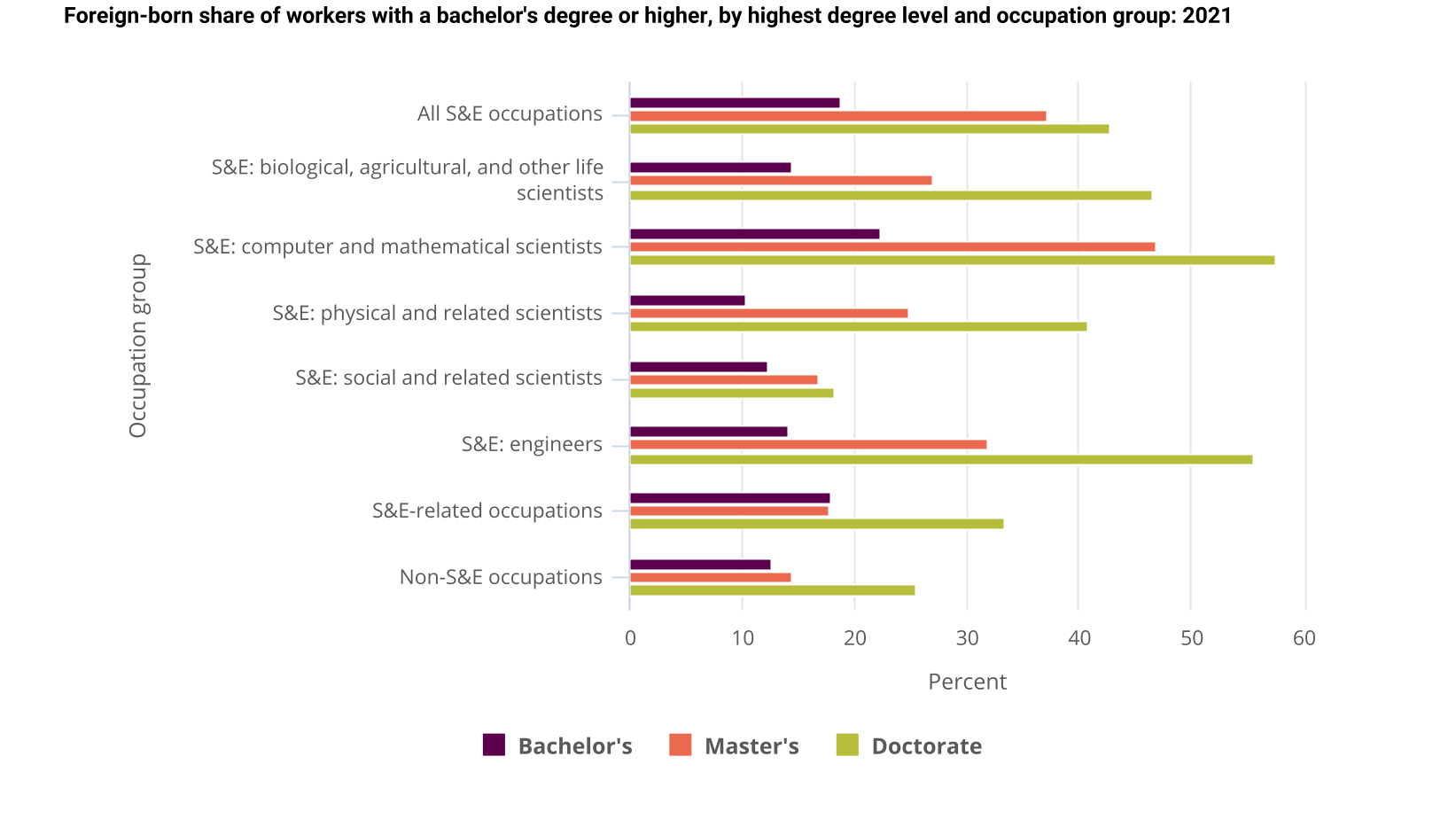
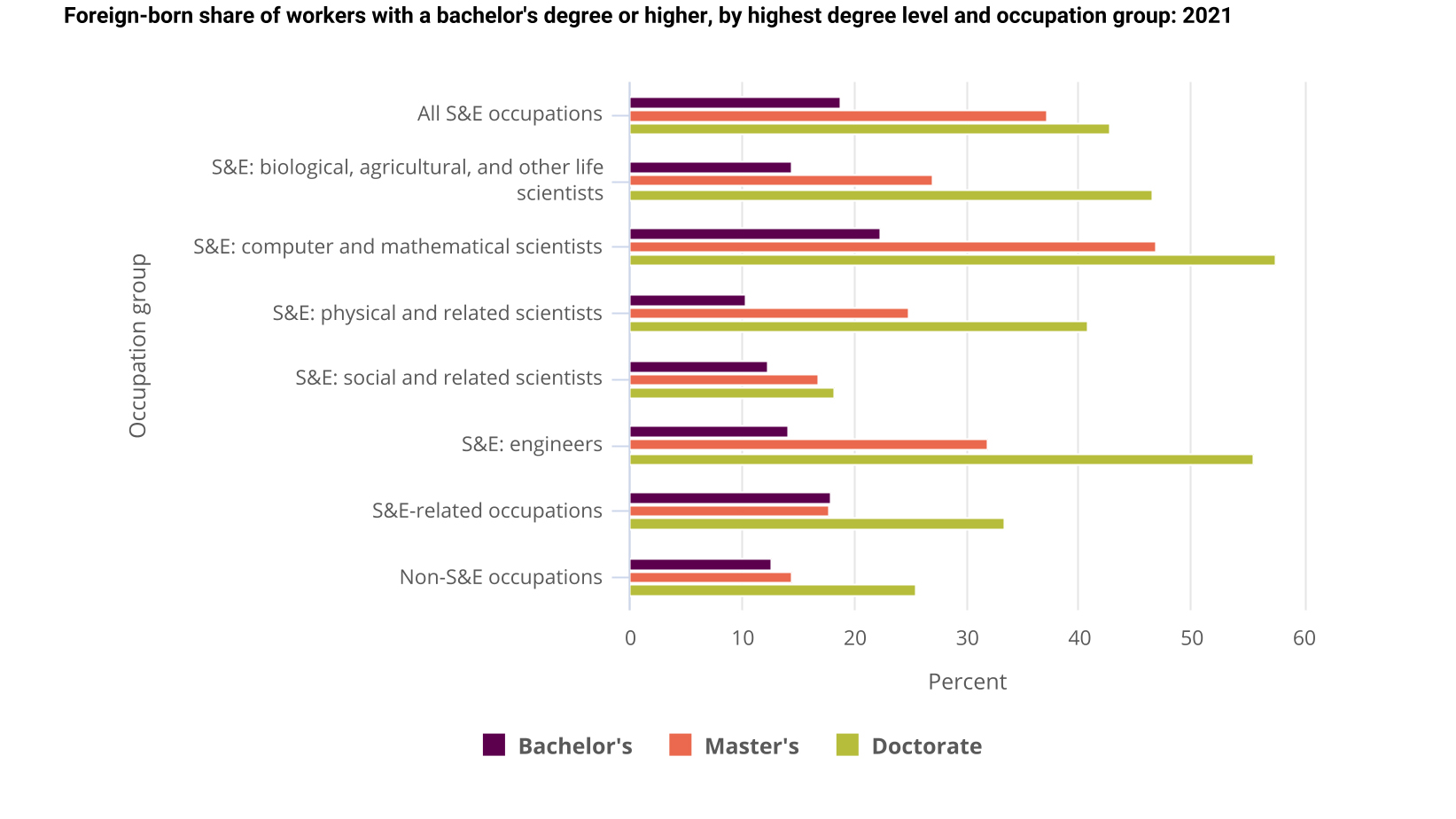
Figure 9 from the National Science Board’s 2024 “State of US Science and Engineering” report.
National Science Board / National Center for Science and Engineering Statistics.
Policy guide: Visa and immigration policy
US visa and immigration policy has had important connections to US science and technology policy since the middle of the 20th century. In that time, immigrants and international visitors have come to comprise a large proportion of the students and workers in science and engineering fields, and this has been especially the case for roles requiring doctoral degrees. Generally, the ability of the US to attract researchers and other technical specialists from abroad has been considered a national strength, and science leaders have routinely advocated for visa and immigration policies that they believe will protect and build on that strength.
Now, though, the second Trump administration has thrown visa and immigration policy into turmoil. The administration’s most radical changes have involved highly aggressive actions against undocumented individuals as well as the reversal of policies allowing people facing dangerous situations in their home countries to remain in the US. Against that backdrop, in early 2025 thousands of students unexpectedly found themselves targeted for potential deportation, sparking a barrage of lawsuits that managed to turn back the immediate threat.
New restrictions have also been instituted for students and researchers, and factors such as the hostile political climate and policy shifts in research security and science funding could have major and lasting effects on the relationship between the US and international research communities.
Contents
At present, this policy guide is divided into two main subject areas:
Deportation threats
In its earliest months, the second Trump administration took steps toward deporting thousands of individuals who were in the country on student visas, claiming they were among non-citizens in the country who were acting detrimentally to its interests. These moves were quickly challenged in court and were largely halted. This section reviews those moves, the authorities the government invoked to make them, the strategies used to challenge them, and issues the moves raised around the rights of non-citizen students and researchers.
New restrictions
The second Trump administration has made an array of policy changes that will have an effect on some international students’ and researchers’ ability to obtain visas. This section reviews country-specific visa bans and restrictions, the administration’s attempts to implement extremely high fees on many H-1B visa petitions, ongoing regulatory changes, including the elimination of duration of status, and the administration’s targeted attempt to prevent Harvard University from sponsoring visas.
About this policy guide
This policy guide aims to orient readers within the complicated and constantly changing visa and immigration policy landscape as it pertains to science policy. It will be periodically updated, expanded, and even overhauled as we continue our research on this topic and as changes to the policy landscape accrue. We will track such changes as they arise from the White House, federal agencies, Congress, courts, state governments, and even individual institutions, but the guide will not necessarily or immediately reflect all developments. As always, anyone needing specific advice should consult with appropriate institutional offices or legal counsel.
This guide is an analytical product developed by Lindsay Milliken and William Thomas of AIP’s Policy Research team. It is not an expression of the views of the American Institute of Physics, AIP’s Member Societies, or AIP’s FYI science policy news service.
Cite this resource
AIP Policy Research, Visa and immigration policy guide, American Institute of Physics, 2026, https://www.aip.org/research/visa-immigration.
Last updated
September 9, 2026