Typing Physics: The essential role of typists in intra-scientific communication


India Bhalla-Ladd
self
We are pleased to share this interview with India Bhalla-Ladd, who made use of our archives for her recent research. Bhalla-Ladd is a PhD student in the Department of Logic & Philosophy of Science at the University of California, Irvine. Her areas of interest include the philosophy of physics, particularly the foundations of gauge theories and quantum field theory, as well as the history of particle physics and feminist philosophy of science. She is the Managing Editor and Book Review Editor for Philosophy of Science, the official journal of the Philosophy of Science Association.
We interviewed her about her paper, “Typing Physics: The essential role of typists in intra-scientific communication ,” which examines the skilled technical typists who prepared physics papers for publication at the American Institute of Physics from 1962–1977. Their expertise in mathematical typesetting helped shape scientific communication during a period of major change in physics.
Corinne Mona: Tell us about your research. What got you interested in the topic of technical typists?

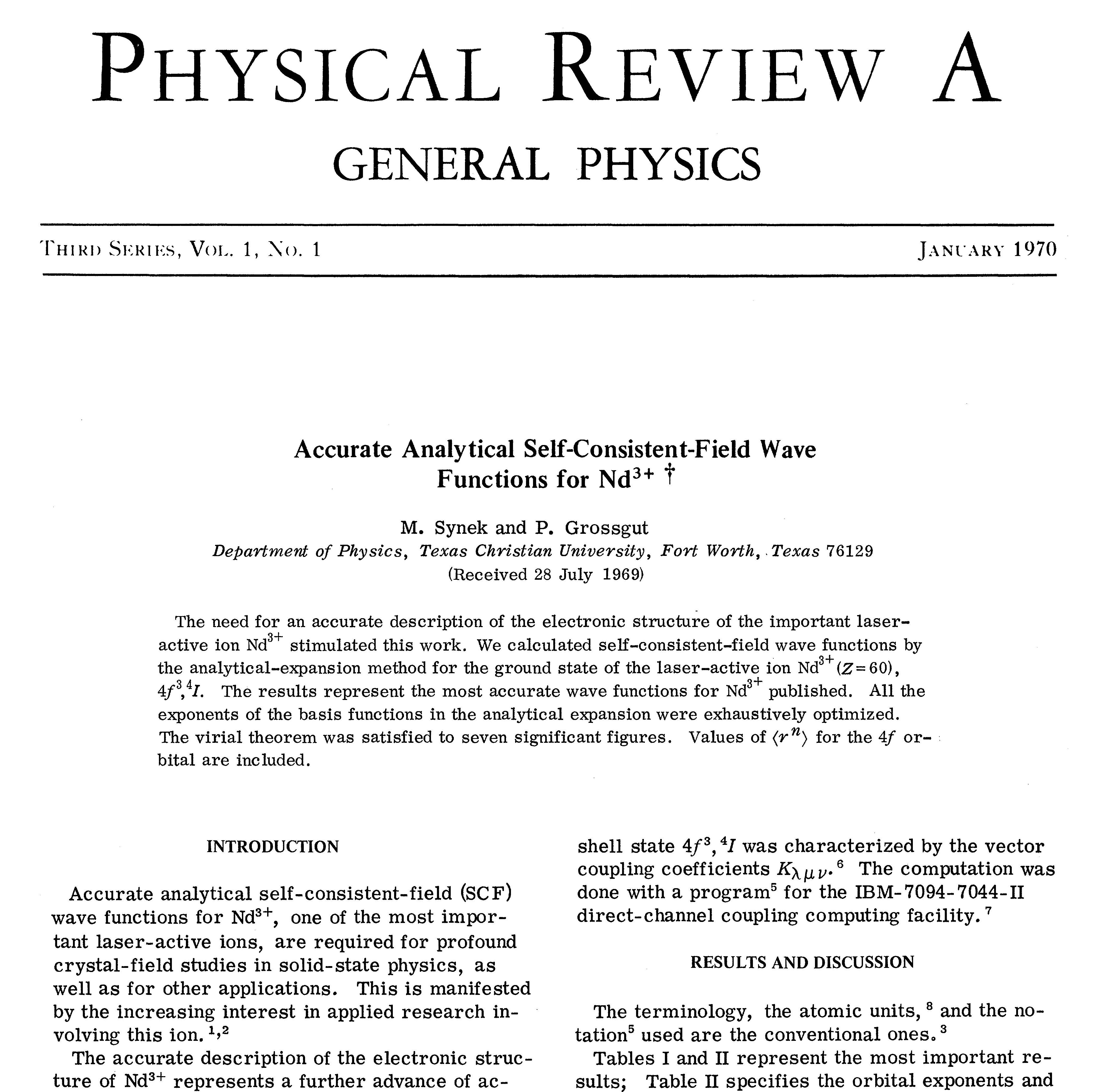
Cropped view of page one of the first Physical Review A article of 1970 to show the journal’s typesetting style.
Physical Review
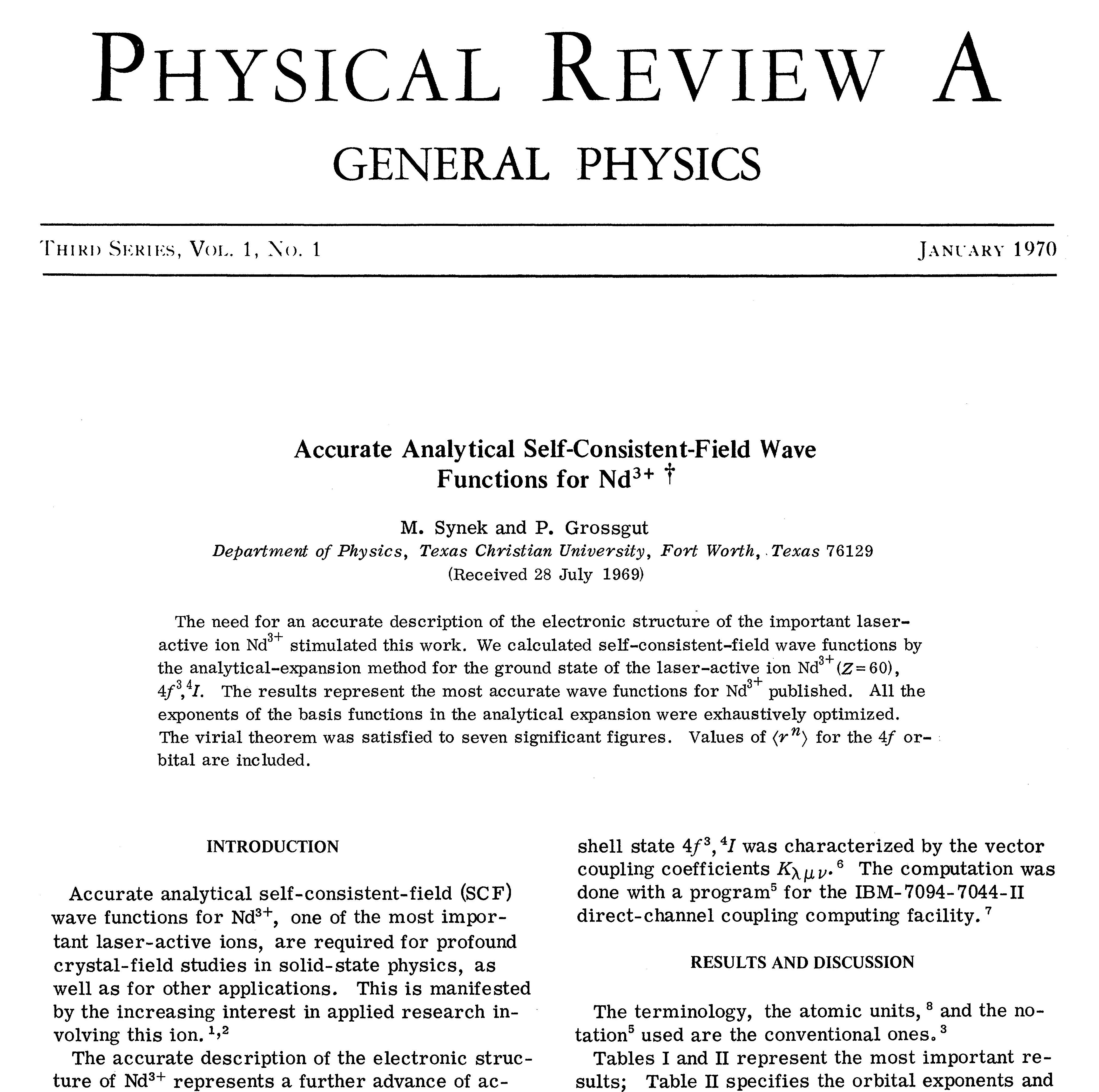
India Bhalla-Ladd: In 2022, I spent a year as a Visiting Researcher at the University of Cambridge working with historian and philosopher of science Hasok Chang. I was looking into the origins of the Higgs Mechanism and spontaneous symmetry breaking, which meant I was spending a lot of time reading articles published in Physical Review from the 1970s. These articles are instantly recognizable, given the journal’s trademark typesetting style and layout. At the time, I had also been hanging out around a friend of mine at Cambridge -- fellow PhD student Emma Marie Duke – who was studying for an MPhil in English Literature. Emma and I have been friends for a while, and we spent a lot of time talking about her interests in the physical life cycle of a book. These conversations got me thinking about the articles I was reading as physical objects rather than just records of interesting physics, with their own life cycle. I realized what a difficult job mathematical typesetting would have been before software systems like LATEX – and specifically, I realized that there must have been a group of people with some amount of technical knowledge responsible for typesetting these articles. Furthermore, I had a hunch that it was likely a group of women, seeing as they would have been proficient in typing as well as mathematics.
Online, I could only find scattered references to this history, but nothing that described who these typists were, how big the operation was, what kind of technical background they had, and why Physical Review had a need for them in the first place. I reached out to the current journal office of Physical Review, but they didn’t have any records either. That’s when I found the Samuel A. Goudsmit papers digitized collection in the Niels Bohr Library and Archives. The archives had a few precious documents available online that referenced the typists and a collaboration with Bell Labs on early mathematical typesetting programs. I reached out to the staff of the Niels Bohr Library & Archives to inquire after these sources, and they directed me to a plethora of digitized and undigitized collections that they thought could be useful (thank you especially to Karina Cooper for her early guidance!). After looking into these items, I knew I had to visit the Archives in person to look through the boxes of undigitized records to see what else I could dig up about the typists.

Technical typist inputting the “head” of a physics article from the 1973 Annual Report.
CM: How did you first learn about the collections at the AIP Niels Bohr Library & Archives? What was the most useful collection that you found and why?
IB: I’ve known about the NBLA for a while. As a philosopher and historian of particle physics, the collection of Oral Histories has always been special to me. However, this project showed me just how extensive the collections are, far beyond the Oral Histories. In particular, the Sam Goudsmit Papers were a goldmine. Sam Goudsmit was the editor of Physical Review who made the decision to hire the technical typists; the documentation from his personal correspondence provided me with valuable insight into the operation’s motivation and evolution over time. Specifically, there was a memo from William Koch to Sam Goudsmit in this collection indicating that they had explicitly sought to hire typists with college-level backgrounds in mathematics and physics. They knew that typesetting annotated, handwritten mathematics from physicists would be a slow process without some background knowledge of what was being typeset and chose their applicant pool accordingly.
The Goudsmit papers also had an entire subcollection dedicated to the switch to computer-assisted typesetting. To me, this is where the history becomes especially cool: the technical typists were intimately involved with both the development and implementation of mathematical typesetting languages at scale. I found evidence in the collections at NBLA that the Publications Division of AIP had been experimenting with computer-assisted mathematical typesetting languages since the mid 1960s, alongside a group of “experimental typists.” Even though this programming language was not ultimately adopted by Physical Review, by the 1970s, the production team (including the typists) began collaborating with Computing Science Research Center at Bell Labs to develop and test an early, UNIX-based mathematical typesetting language. Physical Review typists were essentially beta-testers for Bell Labs, and worked with the Publications Division to tailor the language for the mathematical needs of Physical Review articles.
CM: In your paper, you discuss Goudsmit’s idea to hire technical typists for journal production in response to the crisis of scientific communication happening after World War II. Can you please tell us about that?

Physicist Val Fitch stands in a library behind several stacks of books that illustrate the growth of the yearly bound volumes of “Physical Review” and “Physical Review Letters” from 1918 to 1978.
Robert P. Matthews, courtesy AIP Emilio Segrè Visual Archives, Physics Today Collection. Catalog ID: Fitch Val B5
IB: The most important decision Goudsmit made was to hire typists who had a college-level background in math and science, and to make them part of the in-house production team for Physical Review. Before the technical typists, the journal was in financial crisis: the population of physicists had exploded after World War II, and they were producing research faster than the journal could process it. The previous status-quo involved sending raw manuscripts with handwritten equations out to generic publication houses for a mock-up. Typists in these publication houses would have had little to no mathematical training, and this resulted in frequent errors and delays. By hiring typists with mathematical and scientific backgrounds, and allowing them to work directly with the physicist-editors, Goudsmit was able to vastly improve the speed and efficiency of journal operations.
In particular, typists wore many hats: they took on roles related to layout, gave feedback on the structure of operations, trained other typists, and later worked on new research in mathematical typesetting. They worked closely with physicists, both in terms of content and physical locale, even operating out of the same office in the case of the Brookhaven operation [Brookhaven National Lab]. They were hired for their interdisciplinary knowledge and thus, were often mediating between the vastly different cultures of physics and the world of publishing. This interdisciplinary knowledge was crucial to getting journal operations back on track amidst the information explosion.
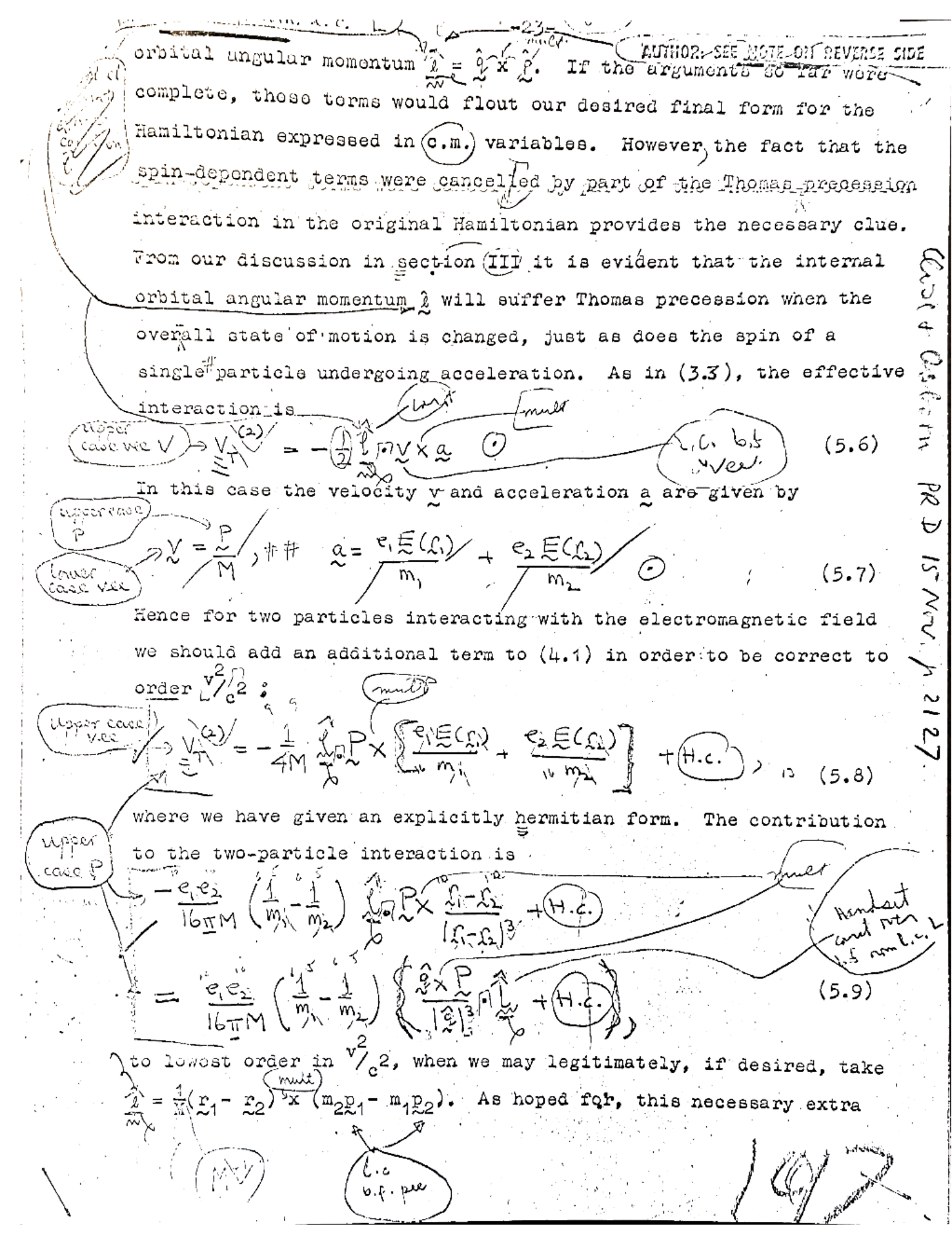
From the article: “Authors were given explicit instructions for how to restructure their mathematical expressions for readability by a technical typist, '...who is neither a physicist nor a mathematician.’ This contact-language involved color-coding, marginal notes to the typist, a reduction of the symbolic language, and some internal codes like the ‘wiggly black line’ meant to indicate boldface. Typists would translate the marginalia (e.g. a squiggly black line) in the equations into the corresponding typewriter keys, sometimes physically altering the keys if a special character was needed.” - India Bhalla-Ladd

Example of a marked-up article.
AIP/Physical Review
CM: You describe how many of the technical typists had expanded roles or roles that blurred the boundaries of typing responsibility to include other areas of the journal’s production. Why do you think this happened?
IB: I think this is a common phenomenon when you see two kinds of experts in different fields collaborating in pursuit of a common goal. The philosophical framing for my articles takes a page out of Peter Galison’s work , in that I analyzed Physical Review as a “trading zone.” The term comes from cultural anthropology and is used to describe how two vastly different cultures cooperate, sharing resources and expertise despite different languages and perspectives on the common goal. Galison famously applied this idea to the large-scale particle physics experiments in the 20th century (i.e. CERN, the bubble chambers) where physicists, engineers, and “scanning girls” had to cooperate.
In these zones, initiates become particularly well-versed in the “contact-languages” of the zone that mediate between the different kinds of expertise. Furthermore, initiates often take on many roles and responsibilities. Because work within the zone requires so much knowledge from both cultures and from their interface, it is often easier for initiates to take on many roles rather than training outsiders. In the case of journal operations, this meant typists took on a myriad of responsibilities besides typing: for some journals, they were also copy-editors (looking for mistakes, communicating with authors and with head editorial, annotating the raw manuscripts for other typists in production), they took on editorial roles (going over final pages with Goudsmit or [George] Trigg, with a particular eye for errors in the typesetting and layout), and even became involved with the research going on in the publications division of the AIP in early explorations of computerized mathematical-typesetting. For each of these roles, typists were especially valuable because they had specialized, interdisciplinary knowledge of the mechanics of typing, mathematics, and journal operations.

Image of a member of the editorial staff participating an experimental phase of computer-assisted photo composition in 1977. She appears to be comparing a typed manuscript with her text-based code input in a UNIX terminal.
AIP. Photo: Morton Rosen
CM: Do you know whether the technical typist setup was employed by other journals at the time, or was this unique to the Physical Review?
IB: My sense is that the AIP Journals like Physical Review were one of the first (if not the first) journal operations to have in-house technical typists, as internal documentation often refers to PR as having made “pioneering moves” in the world of academic publication and typesetting.
Furthermore, Bell Labs reached out to Physical Review specifically while they were developing UNIX, as a unique operation able to test their language at scale. That said, the history of typesetting in academic publishing is really under-documented, so I wouldn’t be surprised if other journals had similar programs (albeit at smaller scales) that we just know less about. I’m lucky that the NBLA kept so many of these records for the case of Physical Review.
CM: Do you have any upcoming research or projects you’re excited about?
IB: Yes! Historically, in Big Science endeavors, it was common to use professionally-untrained people (often women) to analyze an incredible volume of data (the “scanning girls ” are a great example of this in particle physics). Ana-Maria Crețu calls this phenomenon instrumentalization in her paper “Human Computers as Instruments. ” In my paper, I argue that a similar phenomenon happened with the typists, though with some important caveats (see the last section of the paper for details). That said, this project has made me especially interested in the epistemology of these “micro-observers” – to borrow a term from Crețu. In particular, I’m working on a simulation to analyze this kind of learning formally and abstractly, to understand what this knowledge is like, how it differs from traditional epistemologies of scientific knowledge, and what role it plays in the larger scientific project.
I am also working on the original project that inspired this piece, and taking a deep dive into the history of the Higgs Mechanism. In particular, I aim to complicate standard assumptions about the relationship between high-energy physics and solid-state physics through this history, using materials from NBLA.
Finally, as a philosopher of physics, I’m working on quite a lot of projects in the foundations of particle physics and quantum field theory. I have one project on the Cluster Decomposition Principle from QFT, and another one on the gauge argument of Yang-Mills theory.