New Astronomy Bachelors: What Comes Next


A bachelor’s degree in astronomy opens up two main paths for degree recipients: entering the workforce or continuing with their education. This report will examine initial outcomes of astronomy bachelors, including whether they pursued graduate studies (and in what subjects), sectors of employment, starting salaries, AI usage, and knowledge and skills used. Data included in this report come from AIP’s Bachelor’s Follow-Up Survey, Academic Years 2021-22, 2022-23, and 2023-24.
Astronomy Bachelors
Table 1

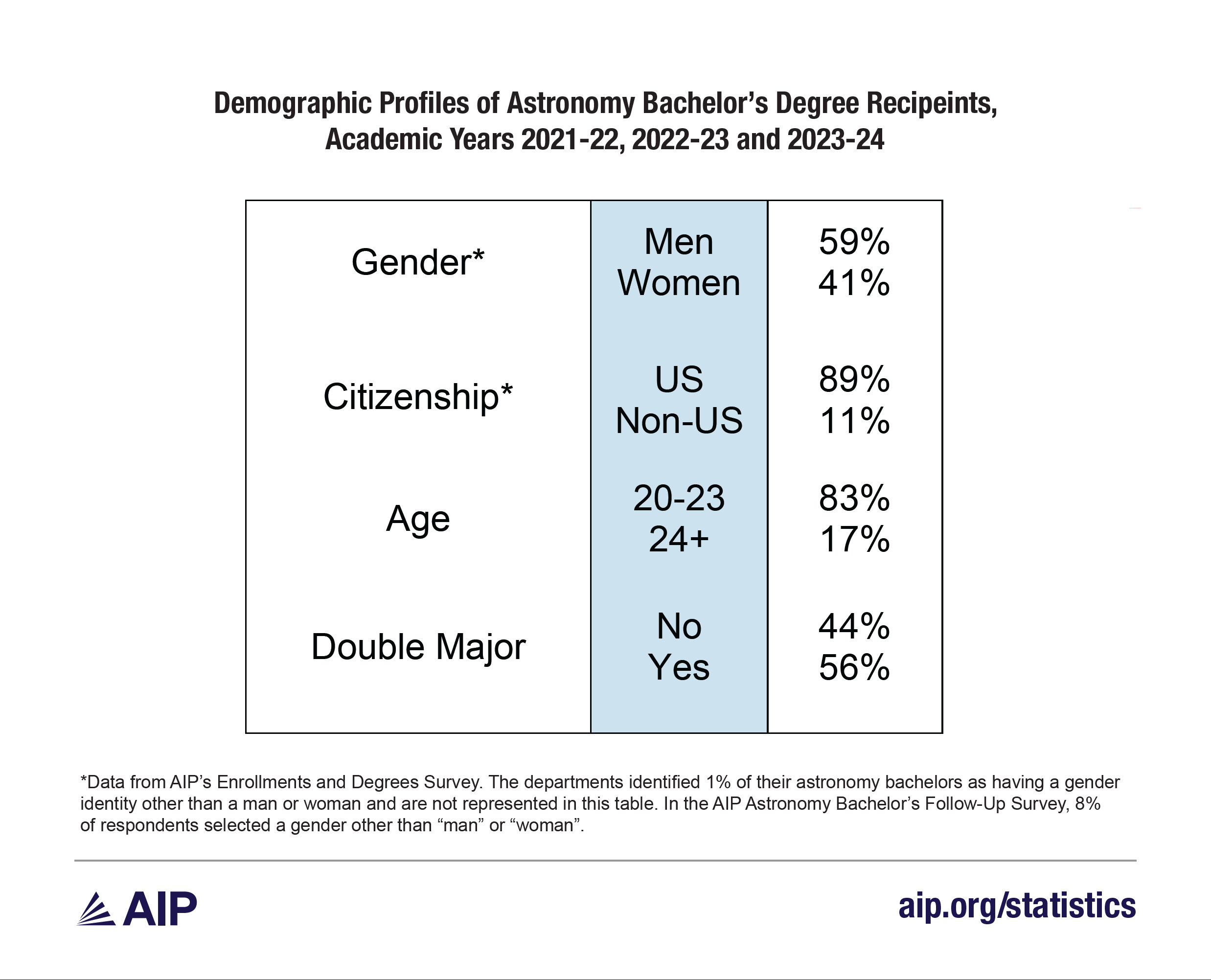
The three academic years of 2021-22, 2022-23, and 2023-24 averaged 929 astronomy bachelor’s degree recipients a year. The number of astronomy bachelor’s degrees granted has steadily grown in recent decades, with an all-time high of 982 occurring in 2023-24. About 41% of degrees were granted to women, and 17% were granted to people over the age of 24 (Table 1). More than half (56%) of astronomy bachelors graduated with a double major, the most common of which was physics, which accounted for 72% of all the double majors.
Initial Outcomes
Figure 1

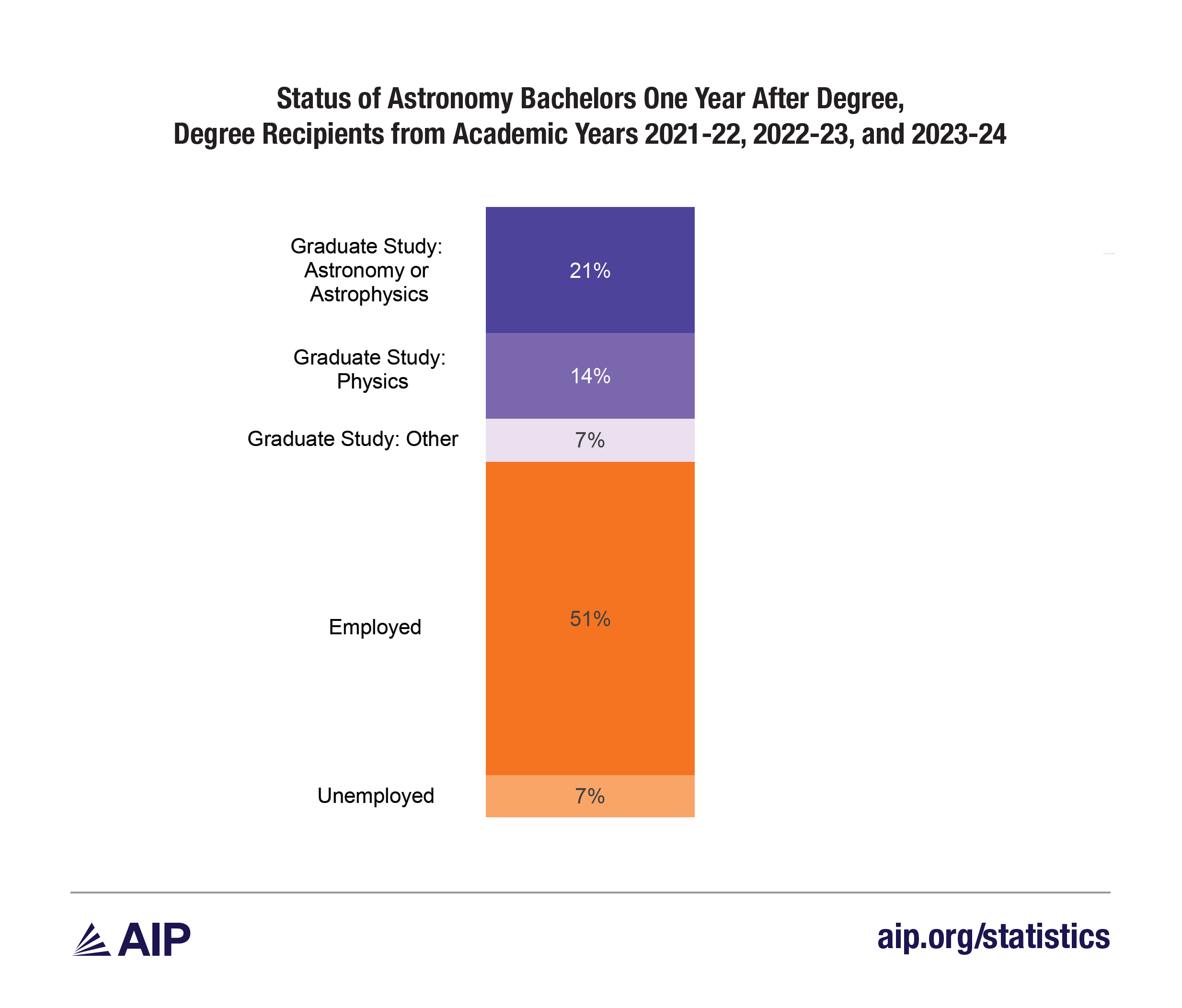
About half of new astronomy bachelors entered the workforce following receipt of their degree (Figure 1). Seven percent of new astronomy bachelors were actively seeking employment in the winter following the year they received their bachelor’s degree. This is similar to physics bachelors who graduated during the same time period. Among the employed, 37% had plans to enroll in a graduate program in the future, two-thirds of whom were hoping to enroll within the next year.
The remaining astronomy bachelors (42%) were enrolled in a graduate program in the winter after finishing their undergraduate degree, the vast majority of whom were enrolled in astronomy, physics, or astrophysics programs. Of those enrolled in a graduate program, 65% were supported by either a teaching or research assistantship, and 22% were supported by a fellowship or scholarship. The remaining students (13%) did not receive support from their institution.
Employment Sectors
Figure 2

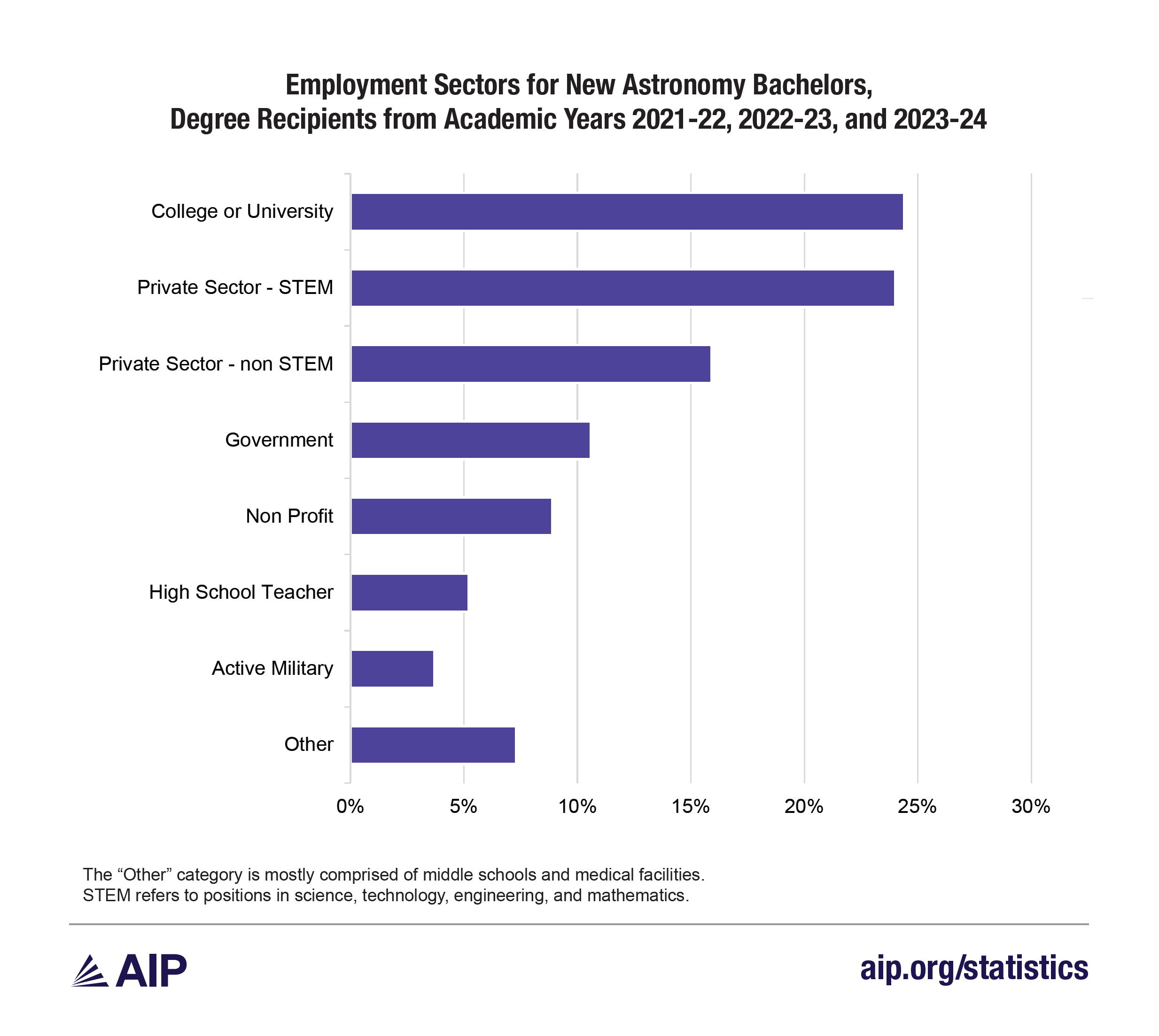
Among employed astronomy bachelor’s degree recipients, the private sector was by far the largest employer of new astronomy bachelors (40%). Over half of those employed in the private sector were in STEM-related positions. Of those in non-STEM private sector positions, half were in part-time positions. Colleges and universities were the next-largest employment sector, employing almost a quarter of the astronomy bachelors, with a quarter of those being part-time positions (Figure 2).
Those employed in STEM positions reported higher levels of satisfaction with their position than their non-STEM counterparts, 71% vs 54% for overall satisfaction, 74% vs 46% for salary and benefits, and 89% vs 63% for job security.
Over half (55%) of astronomy bachelors employed at colleges or universities were employed at the same institution that granted their degree and held positions such as lab or research assistants. This group reported high levels of overall satisfaction (94%) with their positions, although less so for salary and benefits (76%) and job security (71%). The majority of the bachelors in these positions (62%) indicated they planned to enroll in graduate school in the future, implying these positions were often viewed as temporary or transitional.
Fields of Employment
Figure 3

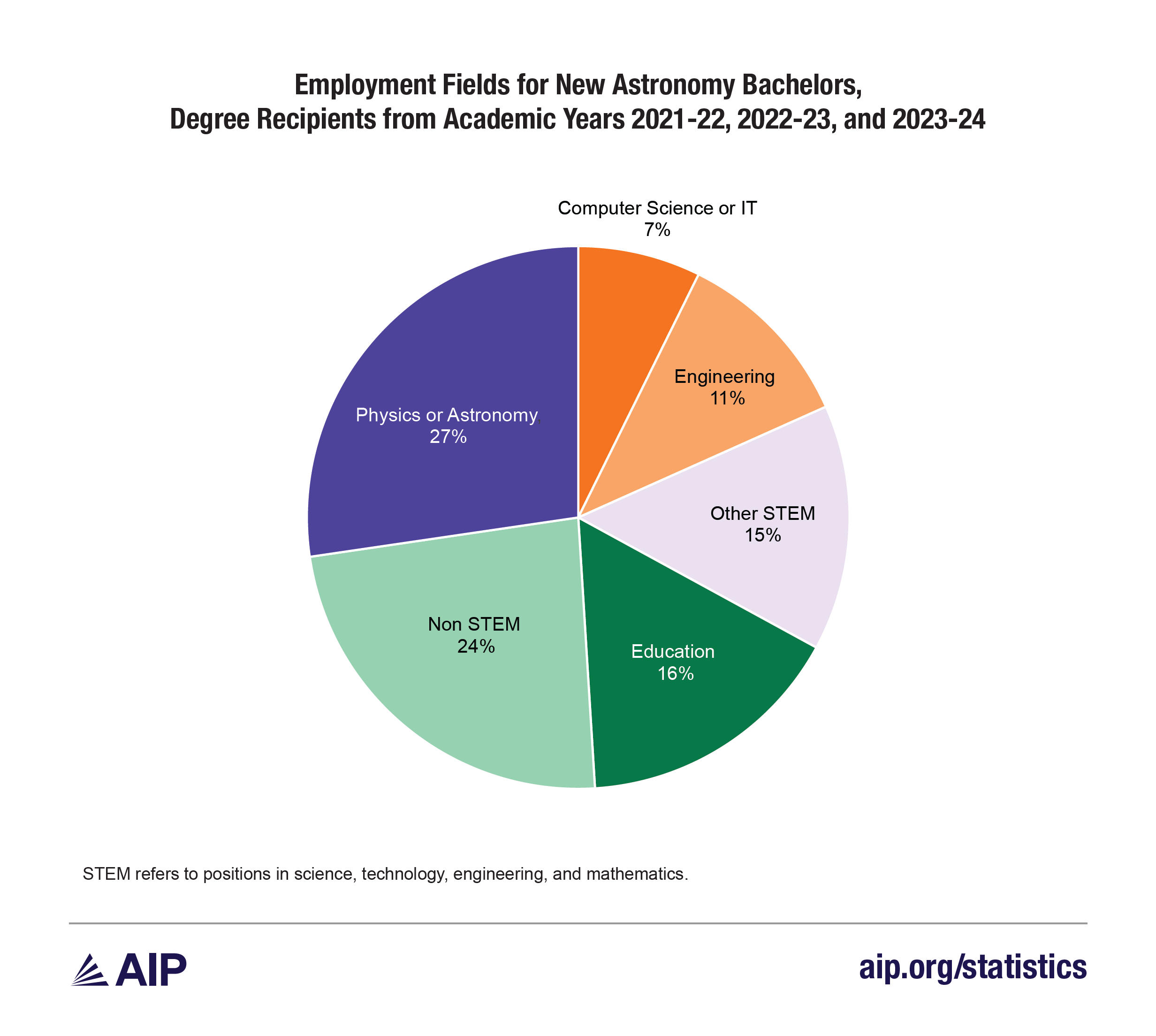
The majority (60%) of employed new astronomy bachelors were working in a STEM field, with the most common being physics or astronomy (Figure 3). The majority (61%) of the astronomy bachelors working in physics or astronomy were employed at a college or university. Those employed in “Other STEM” fields (15%) included natural sciences, data science, mathematics, and other technology related positions. The types of employment for Non-STEM positions (24%) ranged widely, including retail jobs and more technical positions such as operations analysts and program coordinators. Virtually all of the astronomy bachelors working in the field of education were employed at high schools, or at a college or university. Astronomy bachelor’s in STEM positions often had technical job titles, such as “engineer”, “research assistant”, “technician”, and various types of “analyst”. Those in non-STEM positions held a much more diverse range of job titles, but common words included “educator”, “customer service”, and “administration”.
Starting Salaries
Figure 4

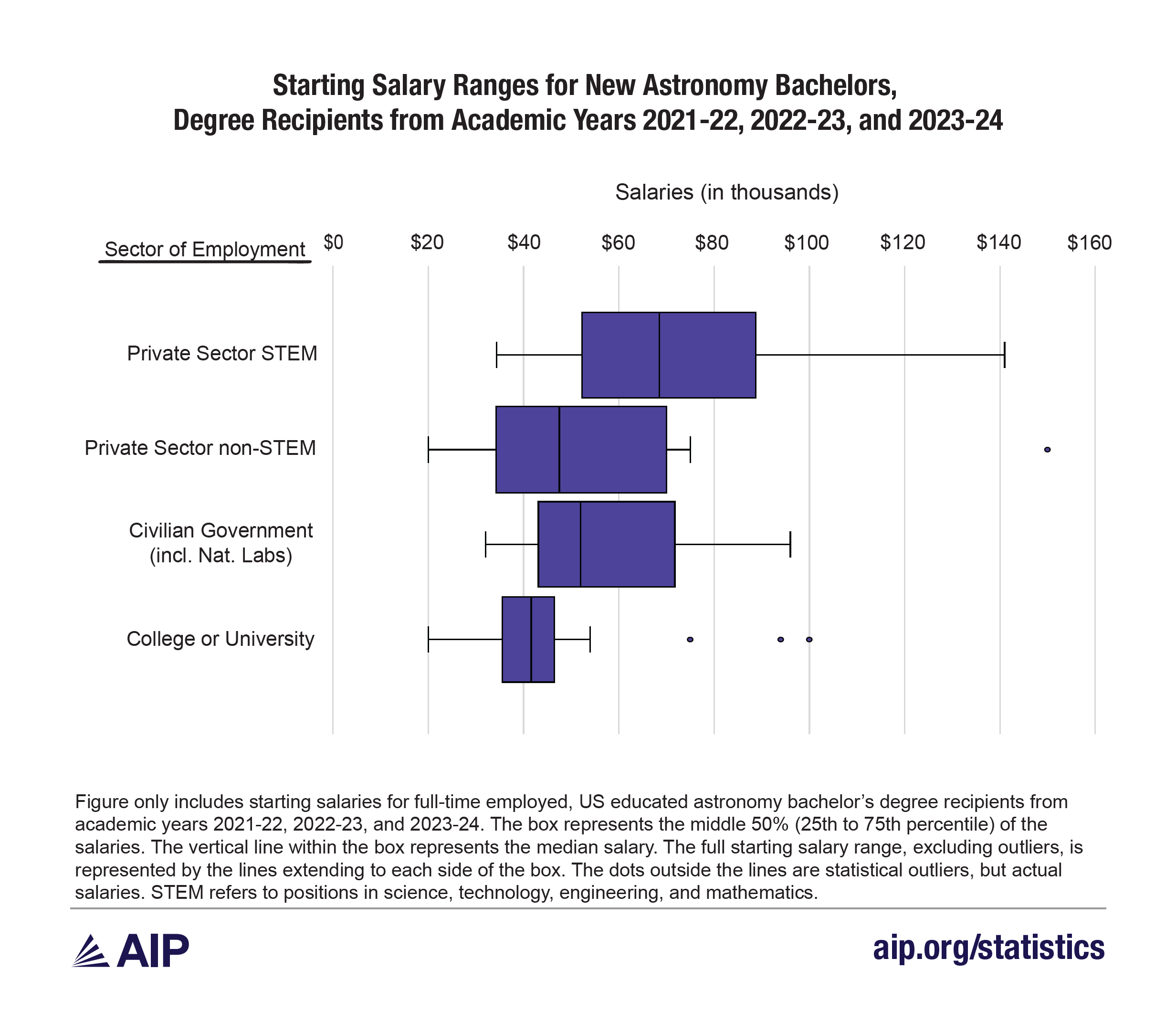
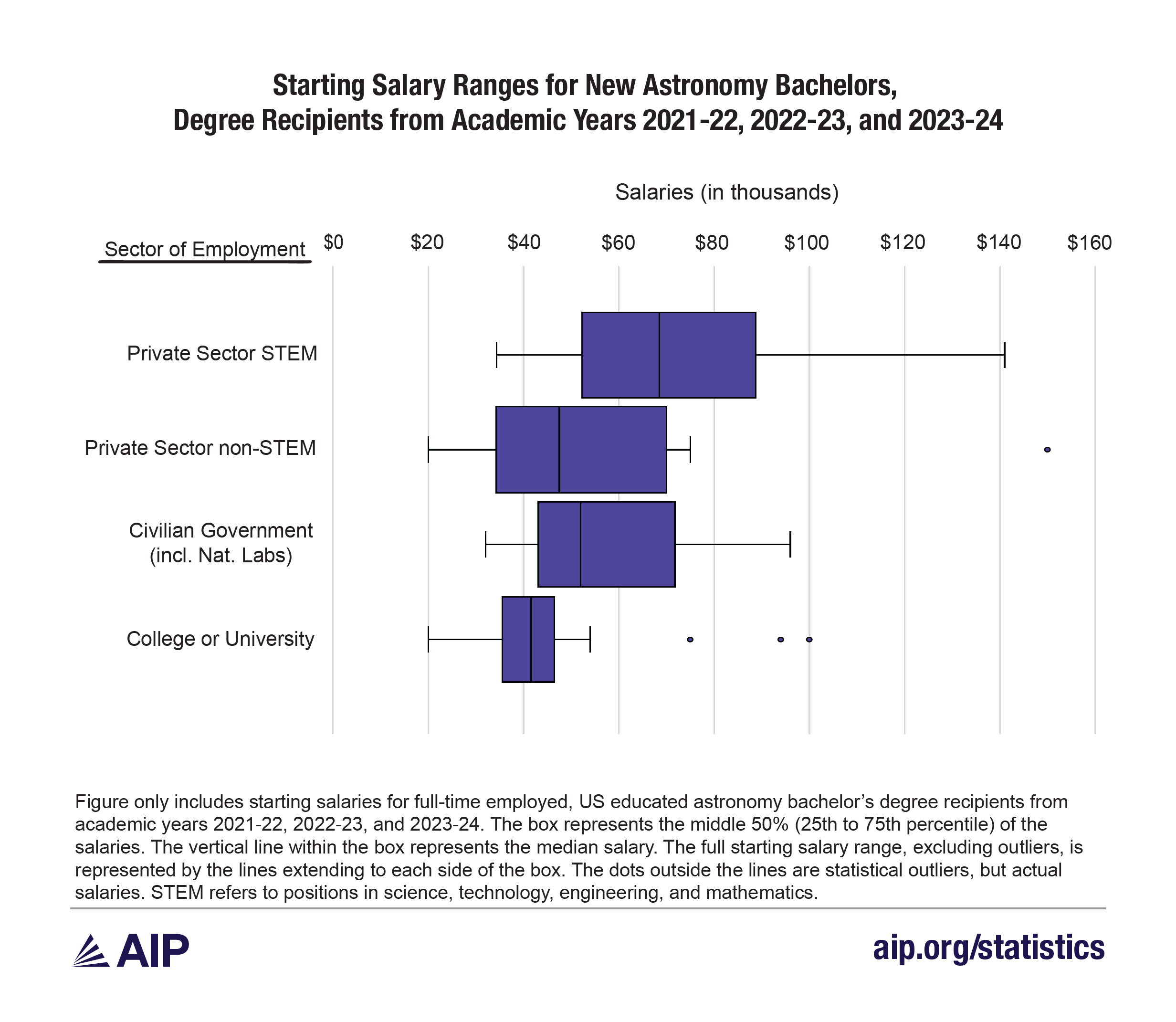
Private-sector STEM positions had the highest median starting salary, at $68,500, as well as the widest range of starting salaries (Figure 4). In contrast, college and university salaries had a median salary of $41,600, and a much narrower range.
Artificial Intelligence
Figure 5

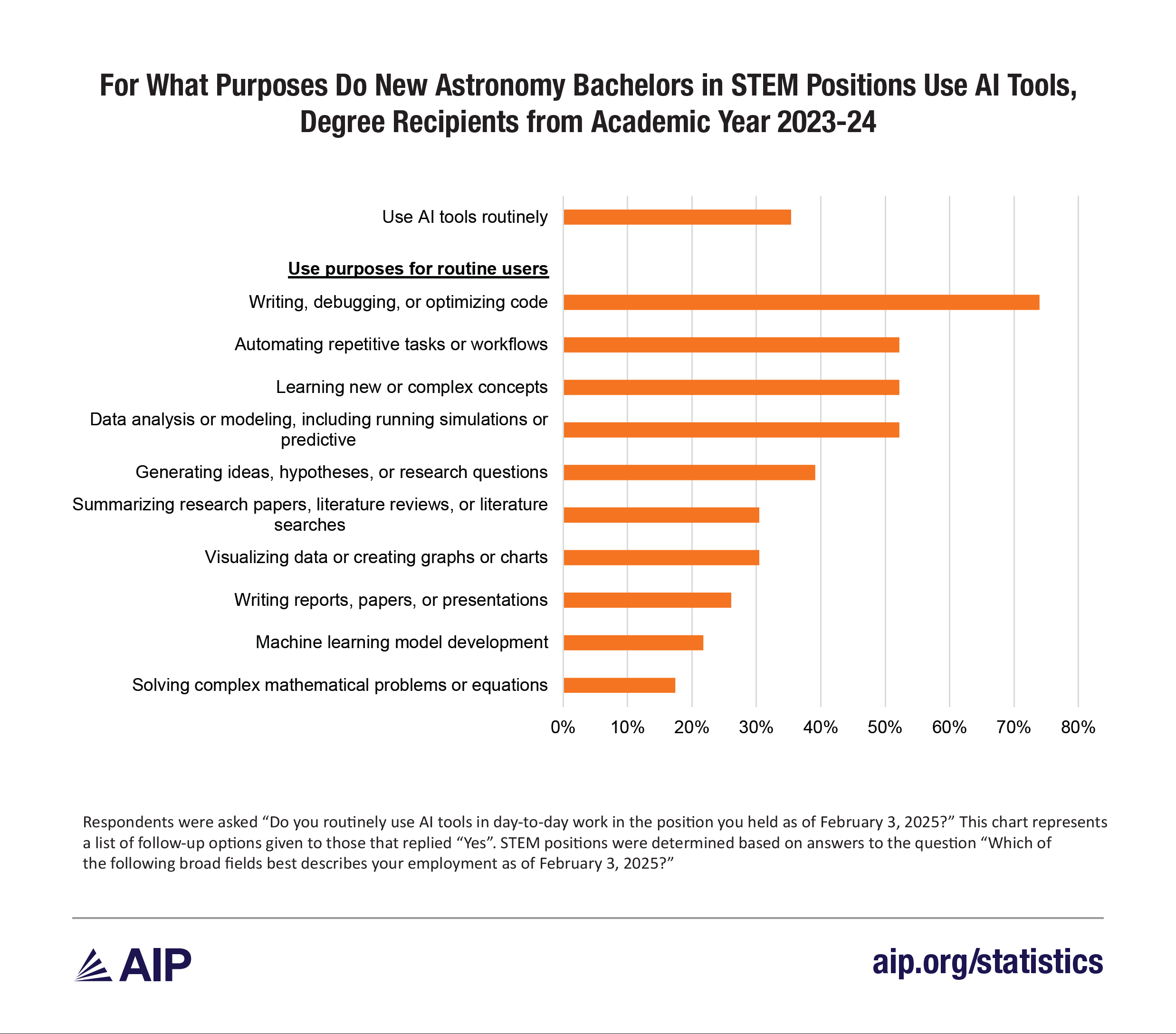
In an effort to assess the widespread adoption of artificial intelligence, AIP added new questions about AI tools and their applications to the 2023-24 degree recipients survey. Results indicate that about a third of employed astronomy bachelor’s in STEM positions use AI routinely at their jobs, compared to just 11% of those in non-STEM positions. Among those in STEM positions, the most common use of AI tools was for “writing, debugging, or optimizing code”, followed by “automating repetitive tasks or workflows”,“learning new or complex concepts”, and “data analysis or modeling” (Figure 5). About 10% of employed astronomy bachelors indicated that their job involved actively developing AI models.
For further related reading, see our report “AI Use Among Physics Degree Recipients ”.
Knowledge and Skills
Figure 6

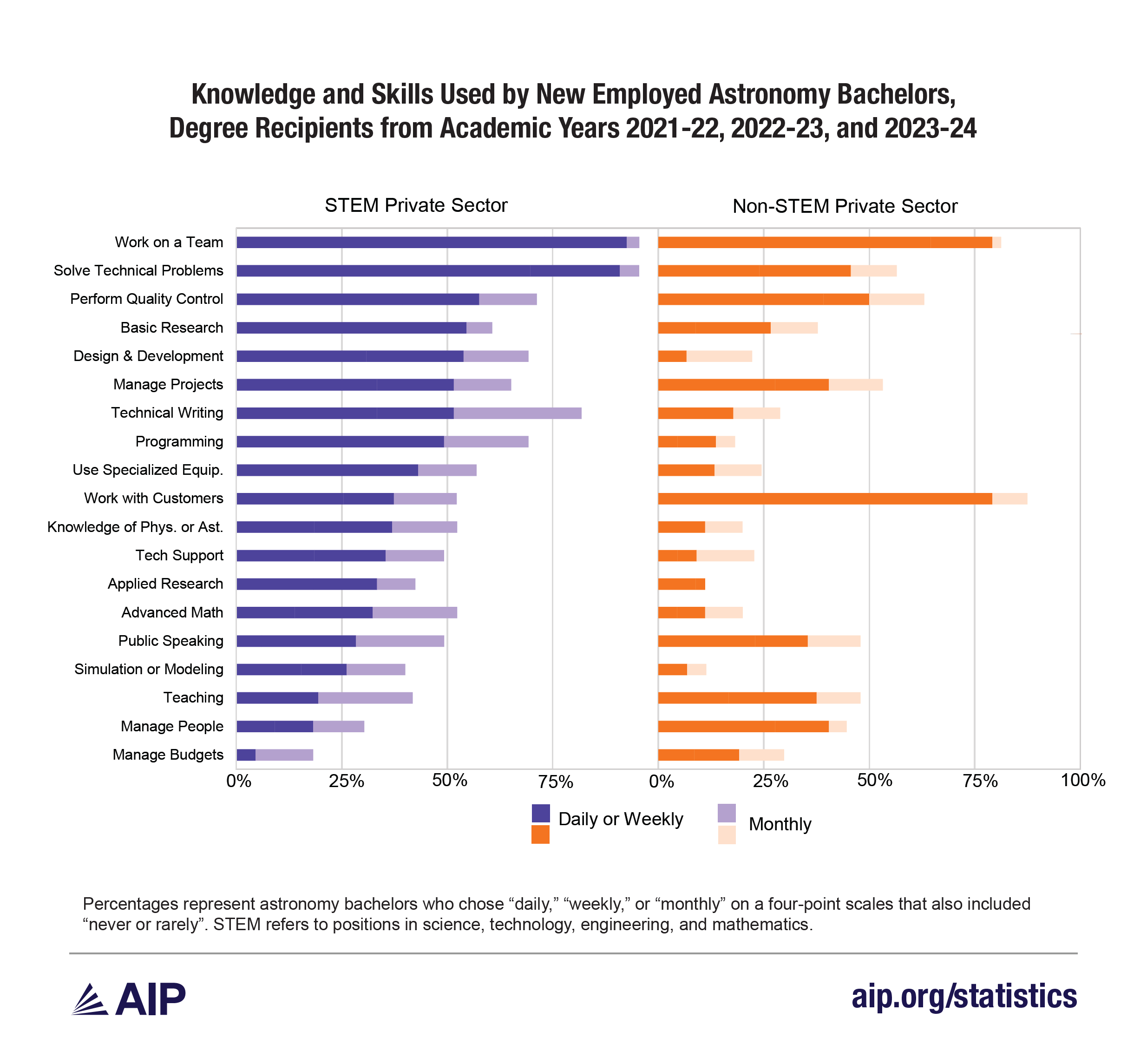
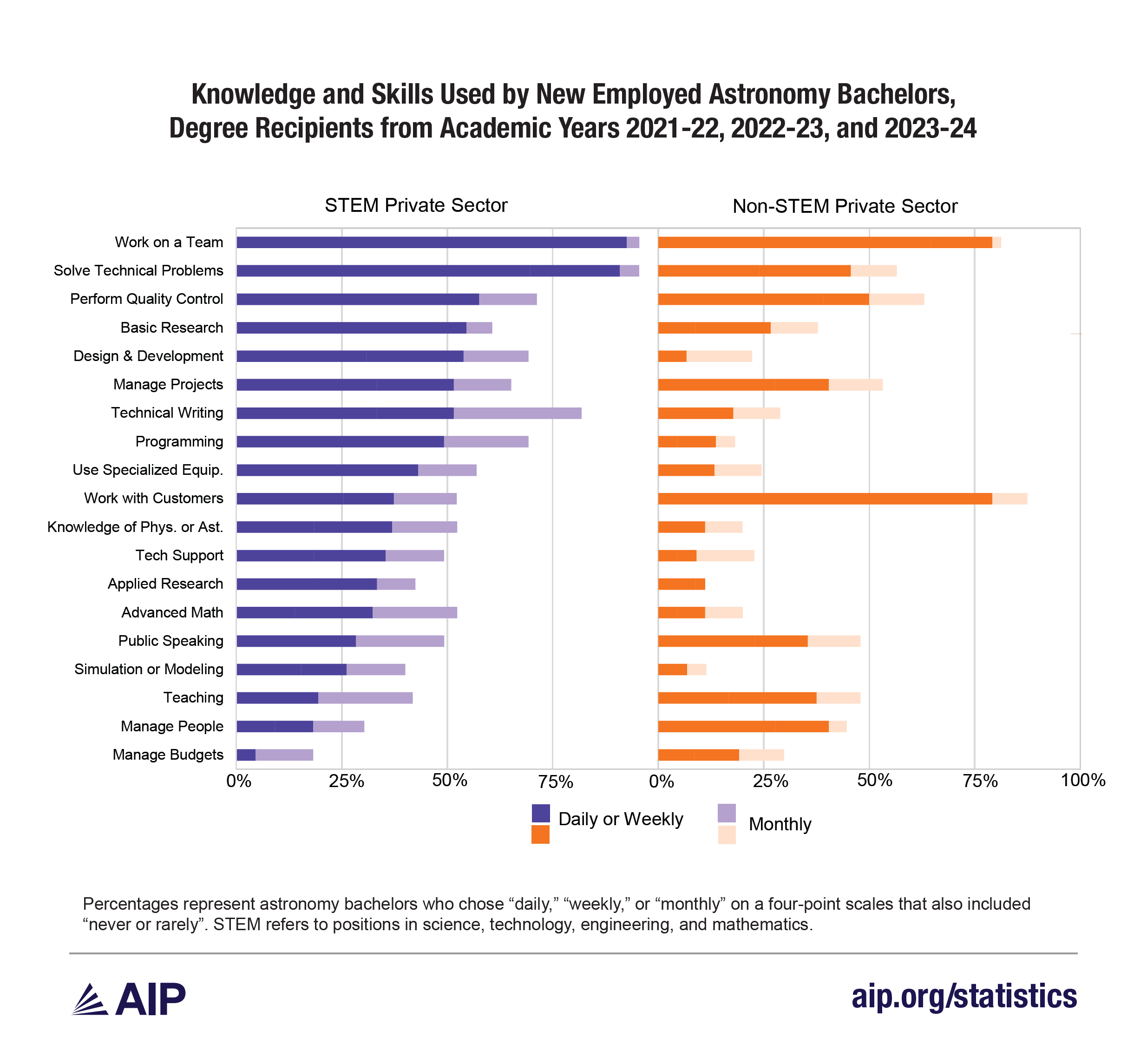
Astronomy bachelors utilize a wide range of skills and knowledge upon entering the workforce, depending on where they find employment, these can vary somewhat (Figure 6). For example, astronomy bachelors employed in the STEM sector more often reported technical skill usage such as solving technical problems, performing research, programming, and design and development, while those employed in non-STEM positions more often reported working with clients. Regardless of employment outcome, almost all astronomy bachelors worked on teams regularly.
Conclusion
Astronomy bachelor’s degree recipients follow two primary post-graduation paths, with about half entering the workforce and just over 40% enrolling in graduate programs within one year. Among those who secured employment, the private sector was the largest destination, and a majority of employed graduates work in STEM-related roles. Those employed in private sector STEM positions had a considerably higher median starting salary than those employed in other sectors. For many holding positions at colleges and universities, their employment was intended to be temporary, with the majority planning to enroll in a graduate program the following year. New graduates working in STEM fields report more frequent use of technical skills than their non-STEM counterparts, and about one-third of STEM employed astronomy bachelors indicate they routinely use artificial intelligence in their work.
Methodology
Each fall, AIP conducts the Survey of Enrollments and Degrees. This survey asks physics and astronomy departments to provide information on the number of students enrolled and the number of recent degrees conferred in the previous academic year. This survey also asks for the names and contact information of recent degree recipients. This information is used to conduct our follow-up surveys in the winter following the academic year in which they received their degrees.
Academic years of 2021-22, 2022-23, and 2023-24 consisted of 870, 934, and 982 astronomy bachelor’s degree recipients, respectively. To assist in determining degree recipient outcomes and to obtain updated contact information, we contact the advisors of non-responding degree recipients. We received initial post-degree information on 33% of these degree recipients, with 85% of the information coming directly from the degree recipients.
New Astronomy Bachelors: What Comes Next By Jack Pold and Patrick J. Mulvey
Published: May 2026
A product of AIP
1 Physics Ellipse, College Park, MD 20740
555 12th Street NW, Suite 250, Washington, DC 20004
stats@aip.org |301.209.3070|aip.org/statistics