High School Physics Enrollments and Class Availability


Report Highlights
- After decades of steady growth, the number of high school students taking physics declined by 0.9% between academic years 2018-19 and 2023-24; the number of high school seniors grew by 1.2% over this same period.
- While the number of students taking physics declined, the number of high school teachers teaching at least one physics course continued to increase.
- The physics-taking rate for high school seniors has remained relatively stable over the last two decades.
- COVID-19 shutdowns and school disruptions, along with an increase in homeschooling and other forms of nontraditional participation among 17-year-olds, could have contributed to the decline in physics enrollment among students in public and private high schools in the US.
AIP (American Institute of Physics) has conducted the Nationwide Survey of High School Physics periodically since 1983 to monitor trends in high school physics course-taking, teacher background and preparations, and the availability of physics to students attending high schools in the US. Collectively, these data provide context for understanding shifts in student participation, curriculum decisions, and external effects such as the COVID-19 pandemic. The survey is a repeated cross-sectional study, and this report includes the data collected for the 2023-24 academic year.
National Enrollment Trends
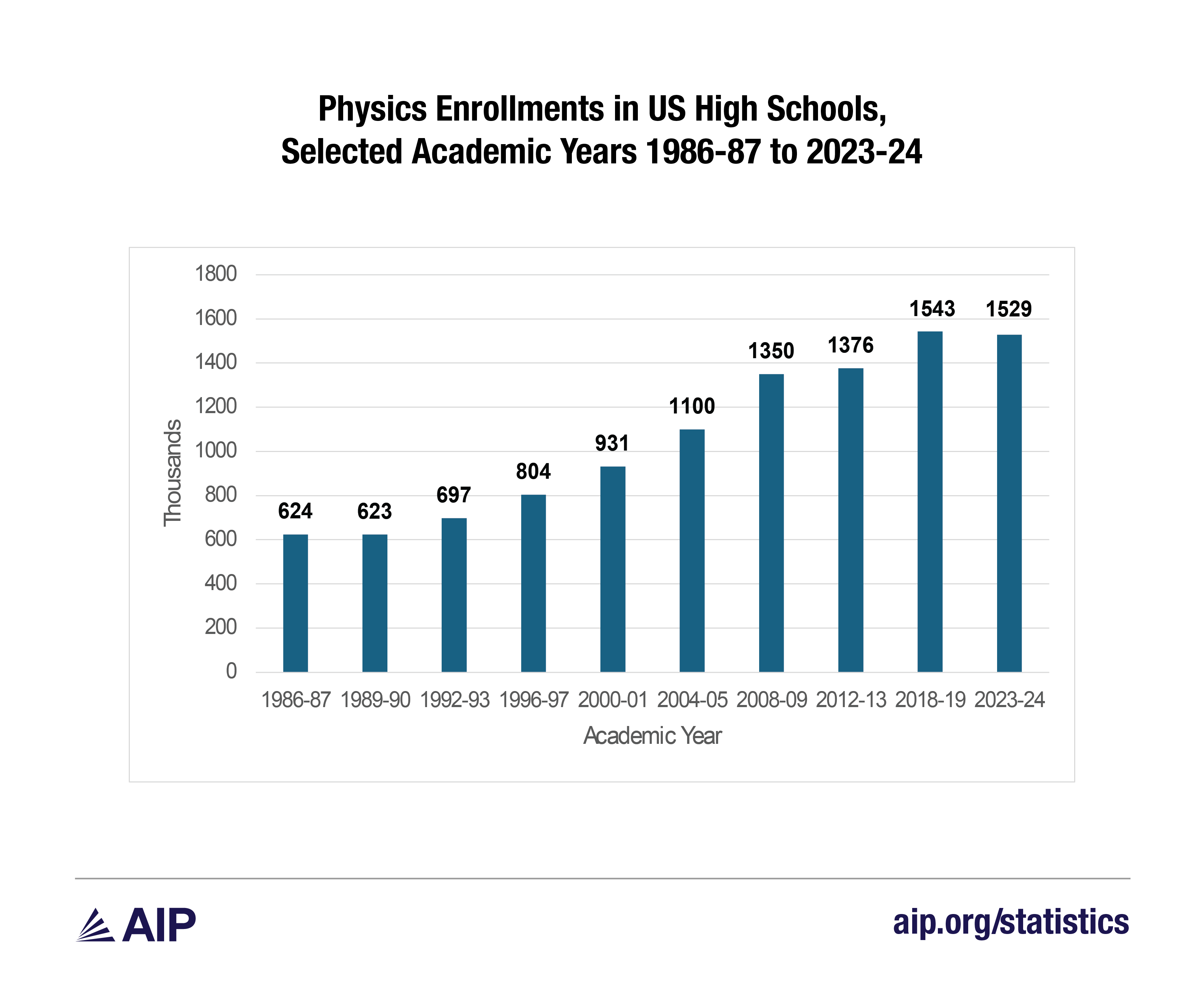
We have seen a steady increase in high school physics enrollments since the survey’s inception in 1983, with one prior exception. The 2023-24 survey marks the first time physics enrollments declined while the number of high school seniors increased.
Figure 1

Figure 1
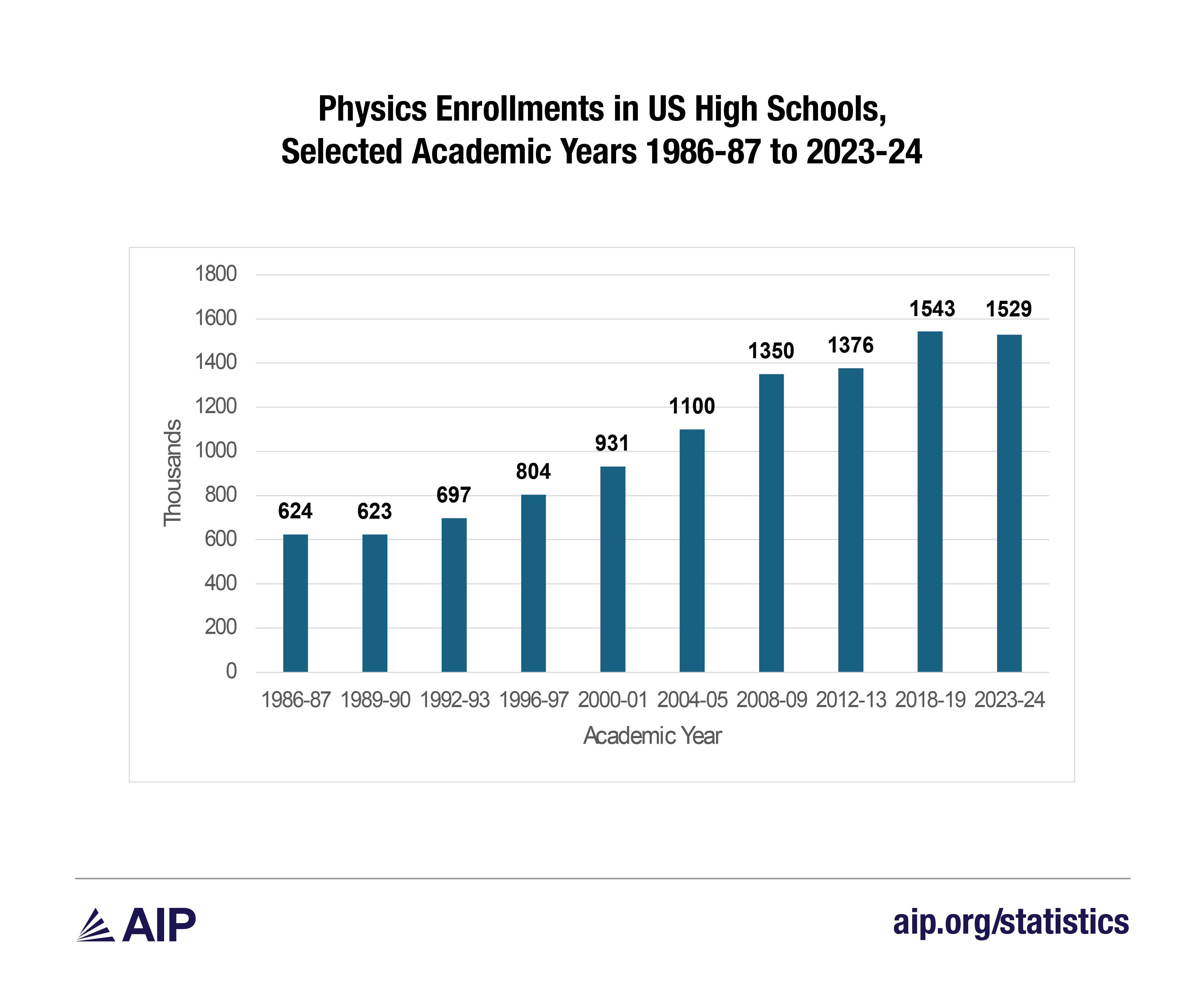
In the 1990 survey, we saw a decline of less than 2% in enrollments in high school physics; however, the number of students in US high schools was down by more than 6% over this same period (NCES, 2001 ). So, the decline in high school physics enrollments was mirrored by an even larger decline in the number of high school students. Our most recent survey shows a decline in the number of students enrolled in high school physics classes, which, for the first time, is not mirrored by a decline in high school enrollments. The number of students taking a physics class declined from 1,543,000 in 2018-19 to 1,529,000 in 2023-24. This 0.9% occurred during a period that saw an overall 1.2% growth in the number of high school seniors (NCES, 2023 ).
These years also saw the COVID-19 pandemic and a historic increase in the proportion of 17-year-olds outside of public and private schools counts, including students who had not yet graduated or who followed nontraditional pathways, a shift partially attributed to homeschooling (NCES, 2024 ; Pula, I., 2025 ). The proportion of 17-year-olds who had not yet graduated from public or private schools steadily decreased to 11% in 2019-20 (NCES, 2023 ). That reversed direction and increased to 14% in 2022-23. Although the grade-based adjusted cohort graduation rate (ACGR) for public high schools remained relatively steady during this period, the change in the ratio of high school graduates to 17-year-olds could indicate a change in the mix of students who were in high school during this period.
Physics-Taking Rate
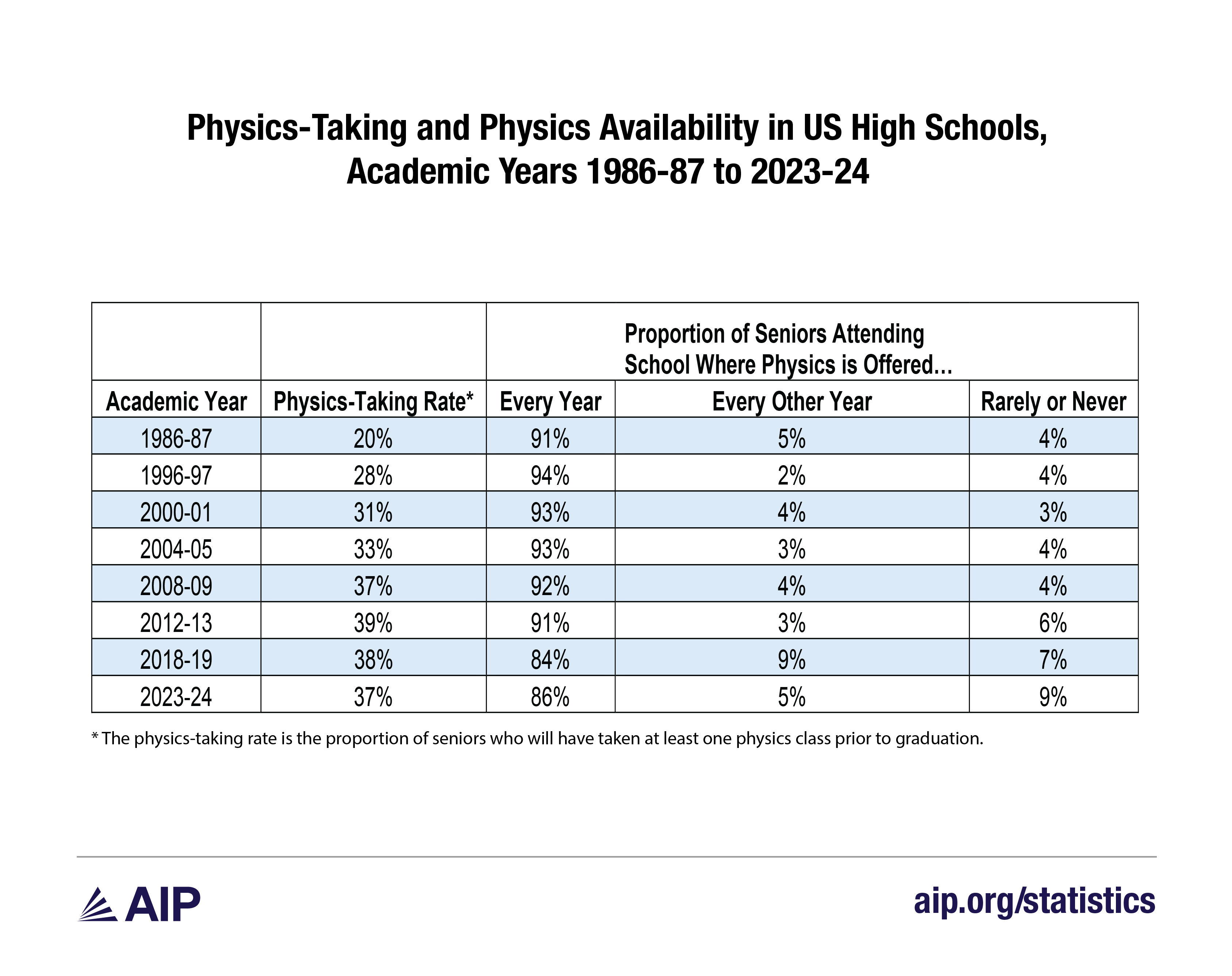
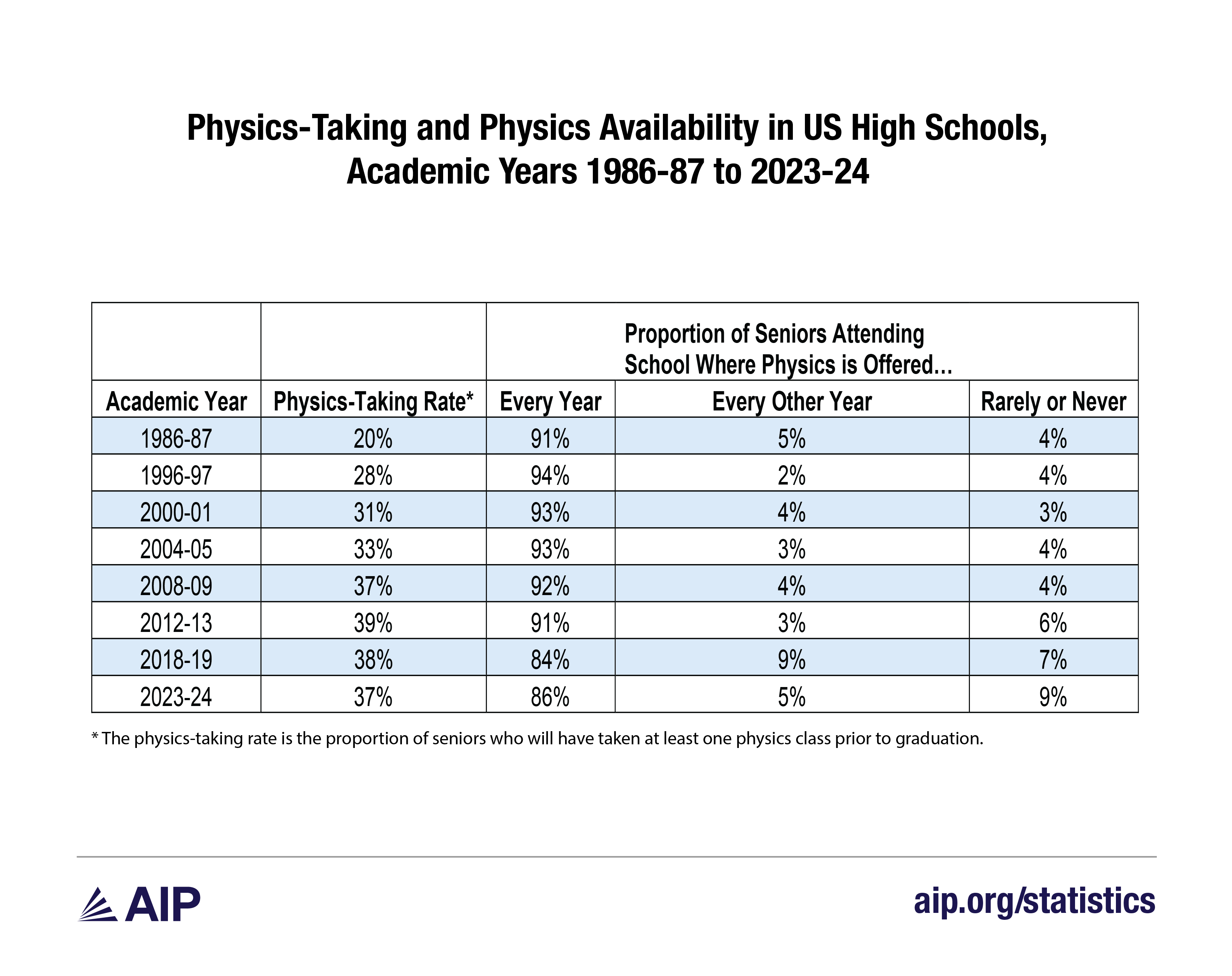
Because students may take more than one physics course before graduating, we use the physics-taking rate to measure the proportion of students who have taken at least one physics class prior to graduation. This measure provides a more consistent way of understanding high school students’ exposure to physics. While the number of students in their first physics course rose to 1,409,900 during the six-year period from 2018-19 to 2023-24, the increase did not keep pace with the growth in the senior population. In Table 1, we see a steady increase in the physics-taking rate in US high schools until 2008-09, when it plateaued.
Table 1

Table 1
Availability of Physics in US High Schools
To understand the availability of physics to high school students, we look at the proportion of seniors who attend a school where physics is offered every year, regularly (e.g., every other year), or rarely. It is important to note that a school offering physics does not necessarily mean it can accommodate every senior who might want to take the course. Alongside the physics-taking rate, Table 1 shows the availability of high school physics to high school seniors by academic year. We use the number of seniors instead of total high school enrollment to measure the number of students in high school; we understand that most high school physics is taken before 12th grade. In addition to the decline in the number of students and the physics-taking rate, we see an increase in the proportion of high school seniors attending a school where physics is never or rarely offered. An increase in the proportion of seniors attending high schools that offer physics every year is offset by a decline in the proportion attending high schools that offer it every other year. Some smaller high schools alternate offering physics with another science.
State-Level Physics Enrollments
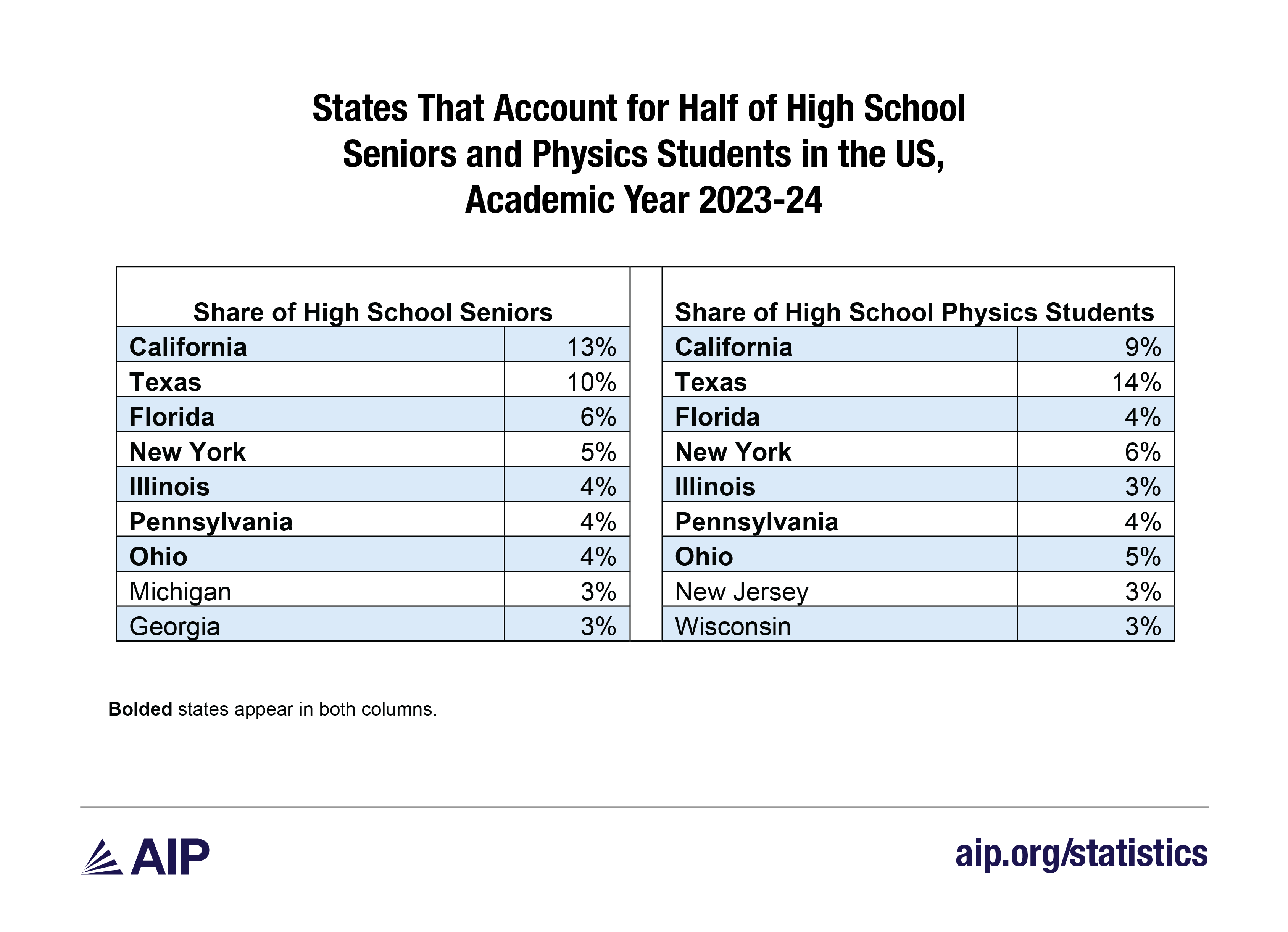
Our Nationwide Survey of High School Physics is designed to be nationally representative, and it does not support reliable analysis of state-level trends. We can, however, look at the states that account for half of the students taking at least one physics course. In 2018-19, seven states accounted for half of the physics students. In our most recent survey (2023-24), we see that nine states accounted for half of the physics students in the US, and nine states accounted for half of the high school seniors. Seven states appear on both lists.
Table 2

Table 2
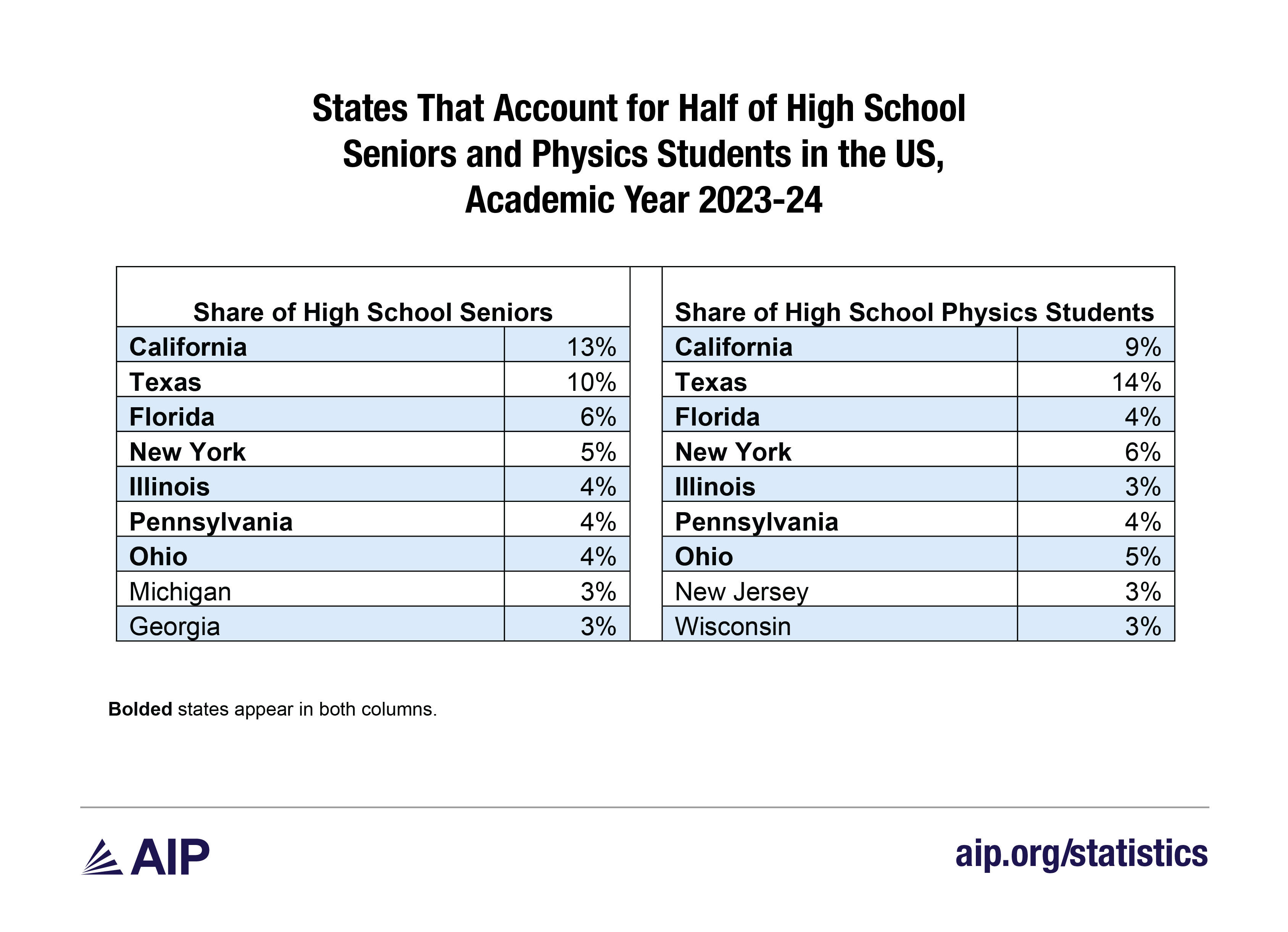
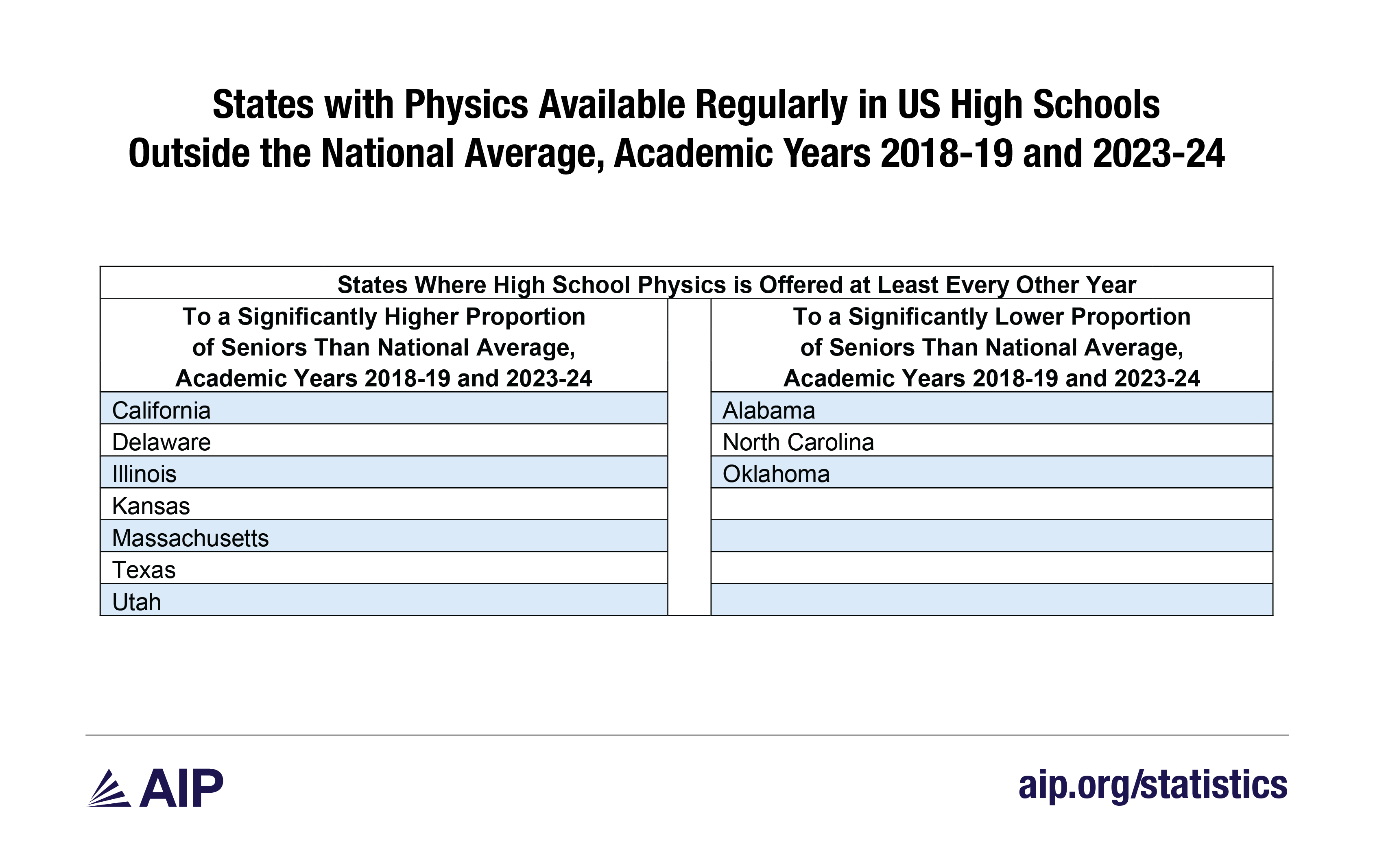
Table 3 shows the states in which physics is offered regularly — every year or every other year — at rates above and below the national average in 2018-19 and 2023-24. In 2023-24, 91% of seniors attended a school that offered physics regularly. As noted earlier, offering physics does not necessarily imply the capacity to enroll all interested students.
Table 3

Table 3
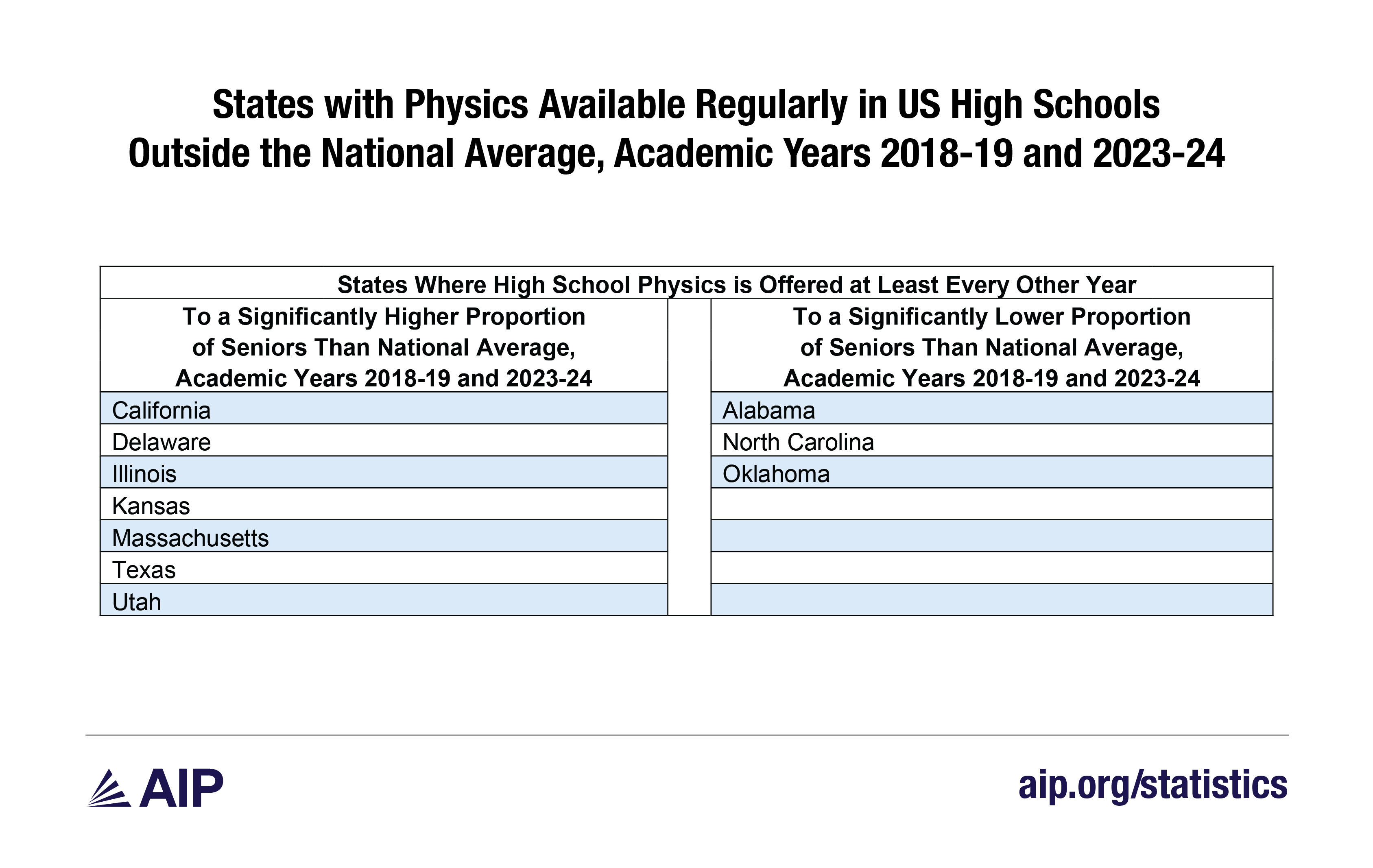
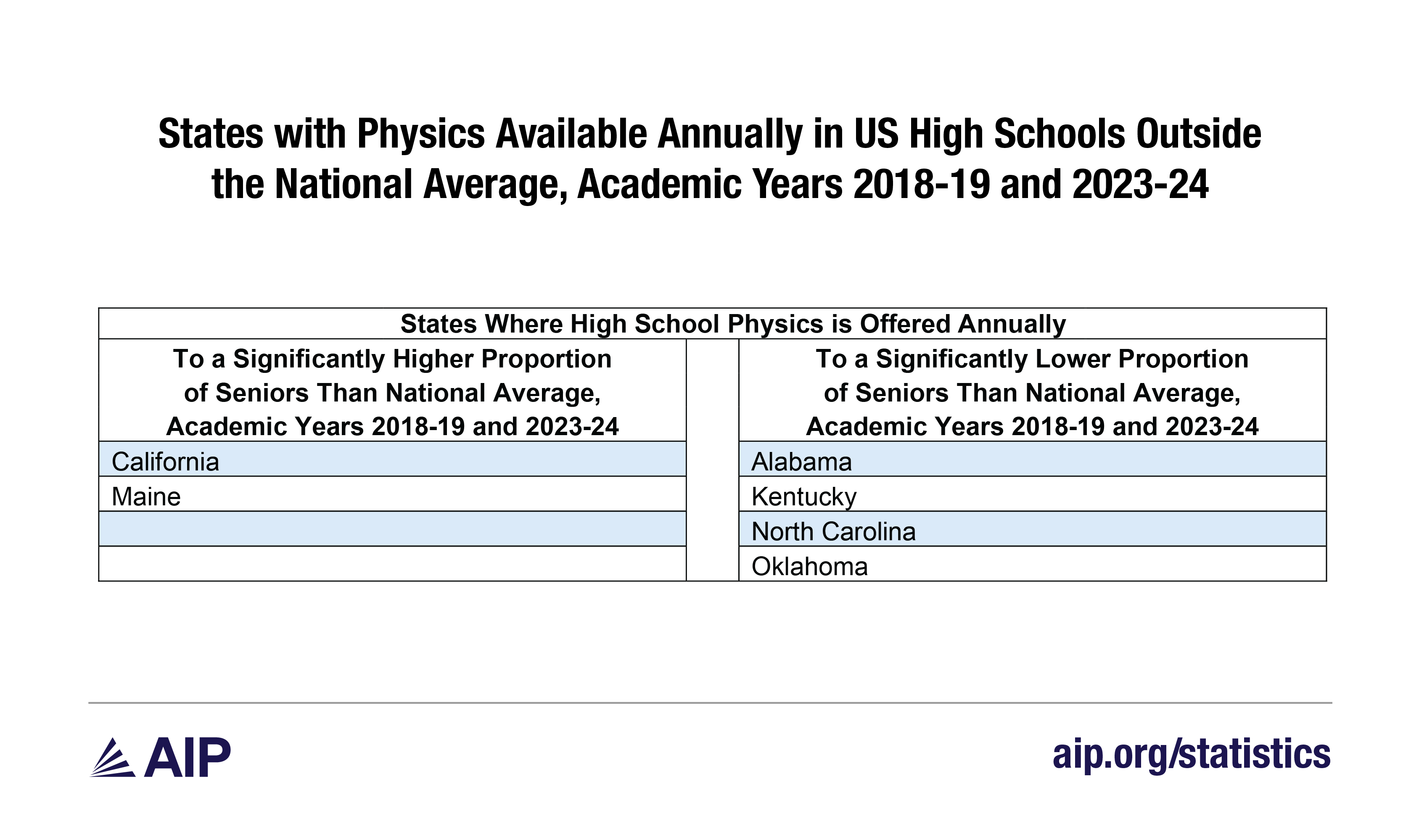
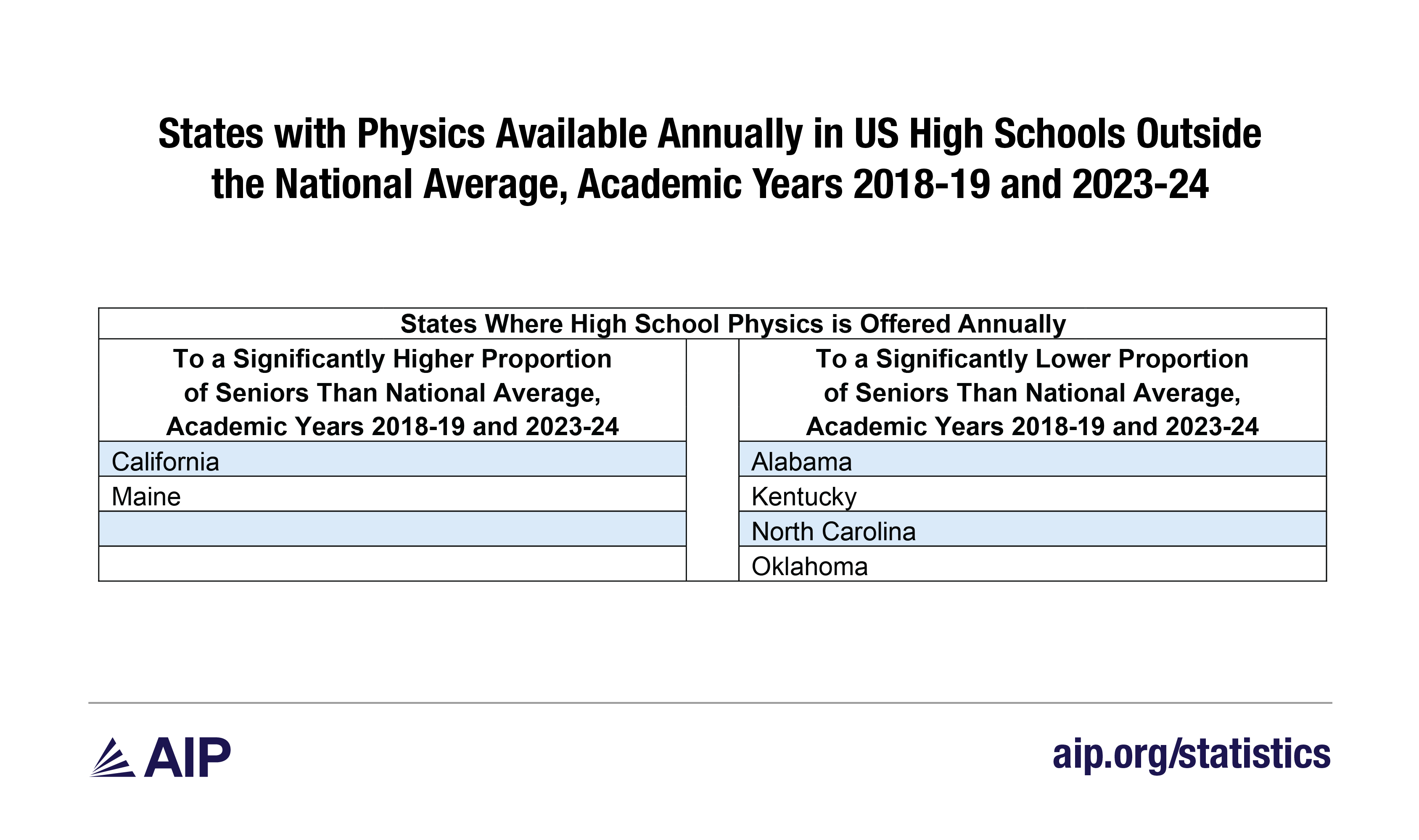
Finally, Table 4 shows the states in which physics is available annually at rates above and below the national average in 2018-19 and 2023-24. In the 2023-24 academic year, 86% of seniors in US high schools attended a school that offered physics annually. Again, the fact that a school offers physics does not necessarily imply the capacity to enroll all interested students.
Table 4

Table 4
Conclusion
The 2023–24 survey marks the first instance since the beginning of this survey in 1983 that physics enrollment has declined while the senior population increased. The decline marks a departure from decades of growth. Changes in school participation patterns, including post-pandemic shifts and increased homeschooling, may partially explain this divergence. About 90% of high school seniors continue attending a school that offers physics regularly.
Survey Methodology
This study draws on a sample representing one-sixth of the US public and private high schools classified as regular, technical, or emphasis schools. Data collection for this round began in the fall of 2023.
This study defines a high school as one with at least 3 students enrolled in grade 12. While most are traditional grades 9 to 12 high schools, some also serve grades 7 to 12 or grades K to 12. Historically, the coverage of high school graduates among 17-year-olds had been increasing to a peak of 89% in 2019-20. It has since started dropping to 86.3% in 2022-23.
The data collection began with web searches for each of the 3,986 high schools in our sample. Once we identified a physics teacher at the school, we collected that teacher’s contact information. If we could not identify any physics teachers, we collected contact information for the principal or science chair to be contacted by phone and email to determine whether physics was offered at the school and, if so, who taught it. We collected data on whether physics was offered from 2,487 of the 3,986 schools in our sample (62%). We compared the demographics of responding and non-responding schools and found no significant differences between the two groups. This suggests that the sample of schools is representative. In the spring of 2024, we contacted each of the 3,103 teachers we had identified in the fall to learn more about physics at each high school. We heard back from 19% of the teachers. We are grateful to the teachers and other school personnel who gave of their time to provide us with data.
This survey series has exclusively focused on physics courses taught in high schools. When the school reported this, we counted these students as enrolled in a physics course. This is consistent with our practice in previous studies.