
Physics Enrollments in Two-Year Colleges, 2023


Report Highlights
- The number of students taking calculus-based physics at TYCs is the highest seen in the three rounds of this study and surpasses the share of students taking algebra- and trigonometry-based physics, making it the largest segment of TYC physics students. Combined, the drop in total enrollment means a larger proportion of TYC physics students are enrolled in calculus-based physics.
- Total physics enrollment at TYCs declined between academic years 2011–12 and 2022–23; this is consistent with total enrollments in TYCs over this period.
- Nearly nine out of ten campuses offering physics courses offer an algebra- and trigonometry-based course; nonetheless, this has been a slight decline since 2011–12. Four out of five campuses offer a calculus-based physics course, which is slightly higher than in the 2011–12 academic year.
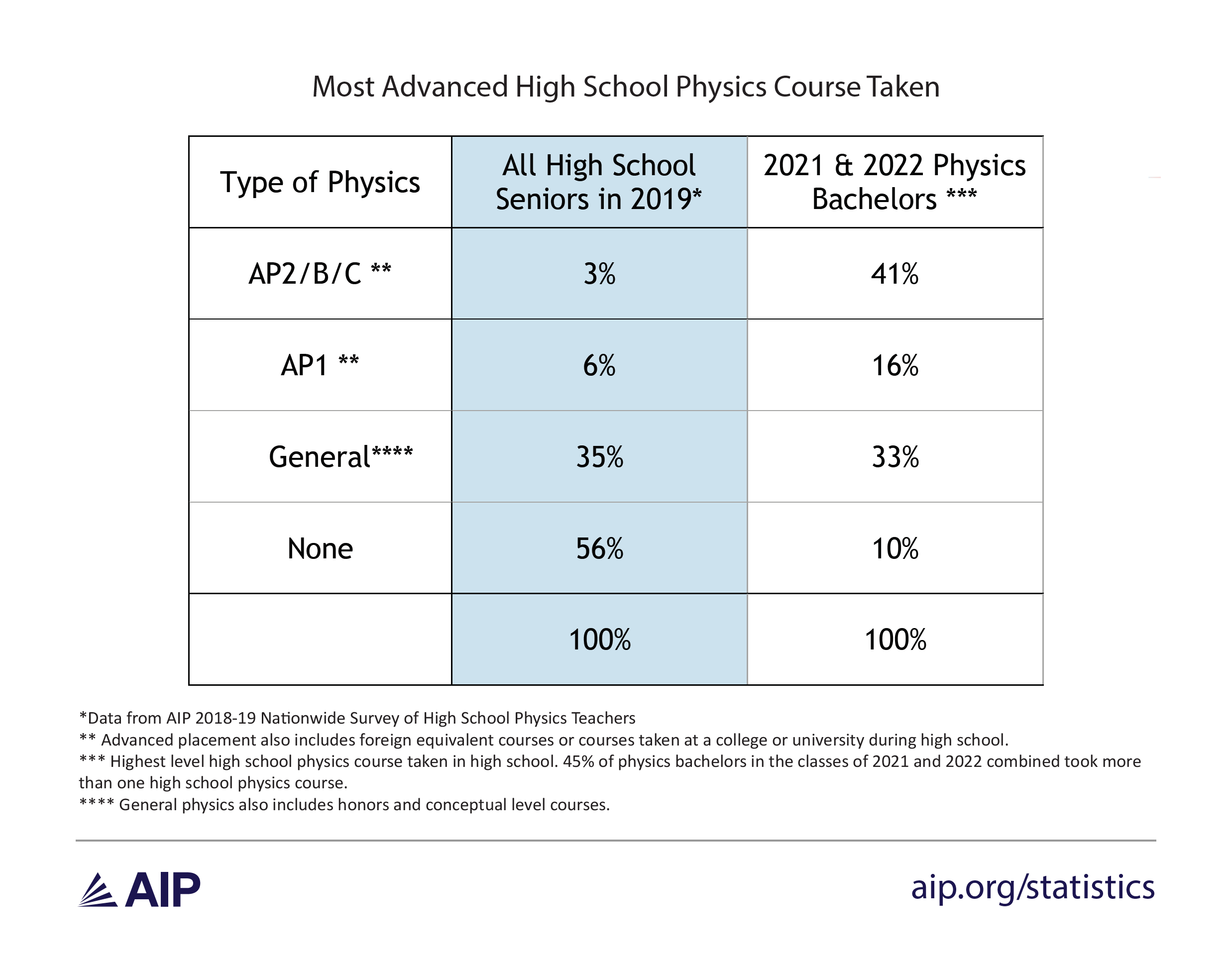
Two-year colleges (TYCs) continue to play a significant role in the physics higher education system. Historically, about one in ten physics bachelor’s degree recipients started their postsecondary education at a TYC (Pold & Mulvey, 2025) . For the classes of 2021 and 2022, about 13% of all physics bachelors started at TYC (Pold & Mulvey, 2024) . We know that having taken a high school physics course can have an influence on the decision to pursue a physics major. Table 1 (Pold & Mulvey, 2024) shows which high school physics course the physics bachelor’s degree recipients took. While less than 10% of all high school seniors in 2019 took an AP physics course, including AP Physics 1, almost 60% of the physics bachelor’s degree recipients took an AP physics course (57%).
Table 1

When we compare the highest physics course a physics bachelors took in high school with whether the student started at a TYC, the differences are stark. Among students who took AP Physics C, only 4% of them started their undergraduate education at TYCs (Figure 1) (Pold & Mulvey, 2025) . In contrast, 40% of those who took no high school physics started at TYCs. This suggests that the physics faculty members at TYCs are influencing students to seek a major in physics.
Figure 1


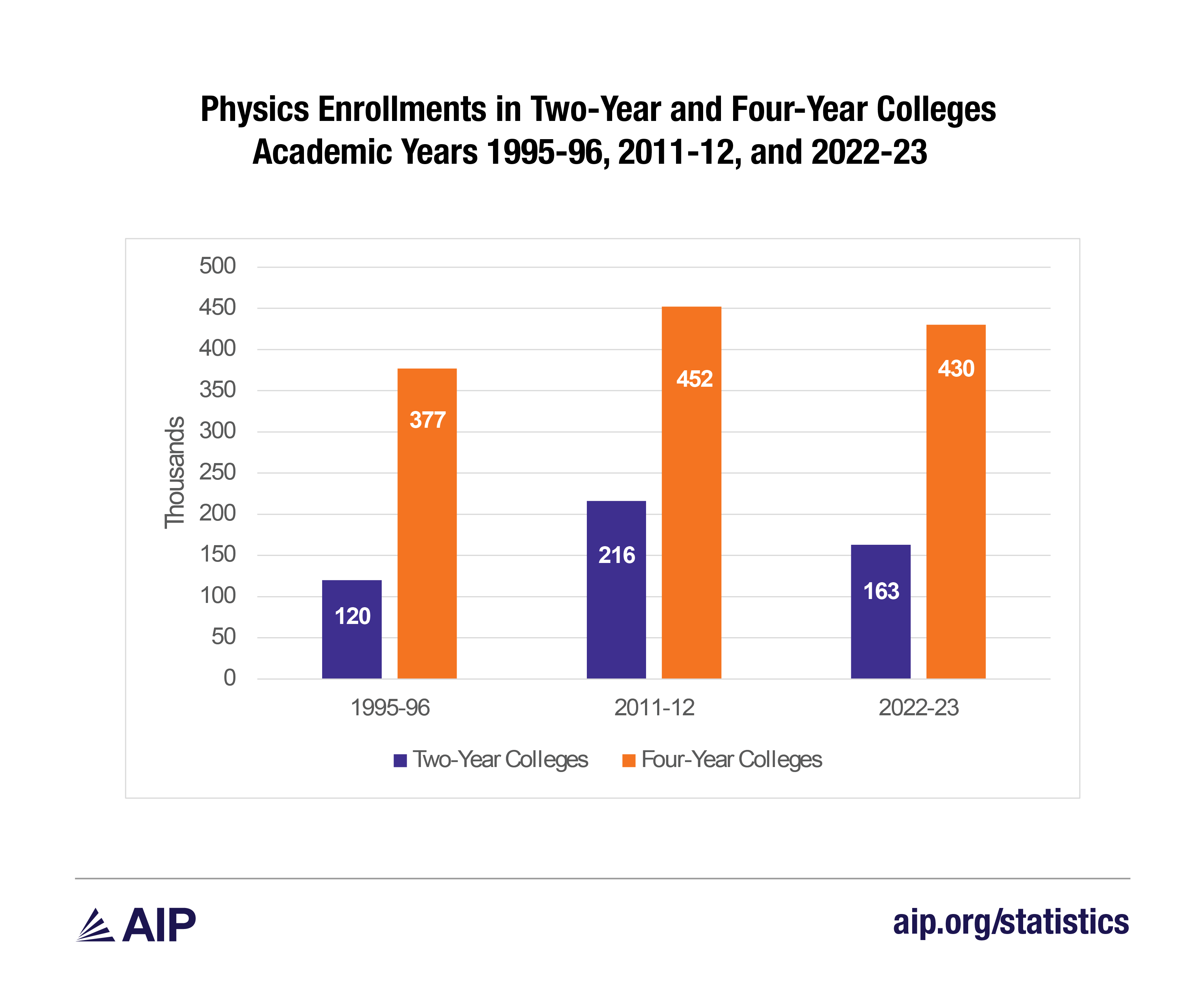
Overall, Figure 2 shows that total physics enrollment at TYCs has declined since the previous survey after a robust increase between the preceding surveys. This is consistent with overall enrollments in TYCs over this period.
Figure 2

TYCs offer a variety of physics courses. Nearly nine out of ten campuses offer physics courses that use algebra and trigonometry (Figure 3). The second most offered course is calculus-based physics, which is offered at four out of five campuses. Conceptual physics is offered at around three out of five campuses. Although more campuses are offering diverse types of physics courses, the proportion of campuses offering any physics course is showing signs of flattening.
Figure 3

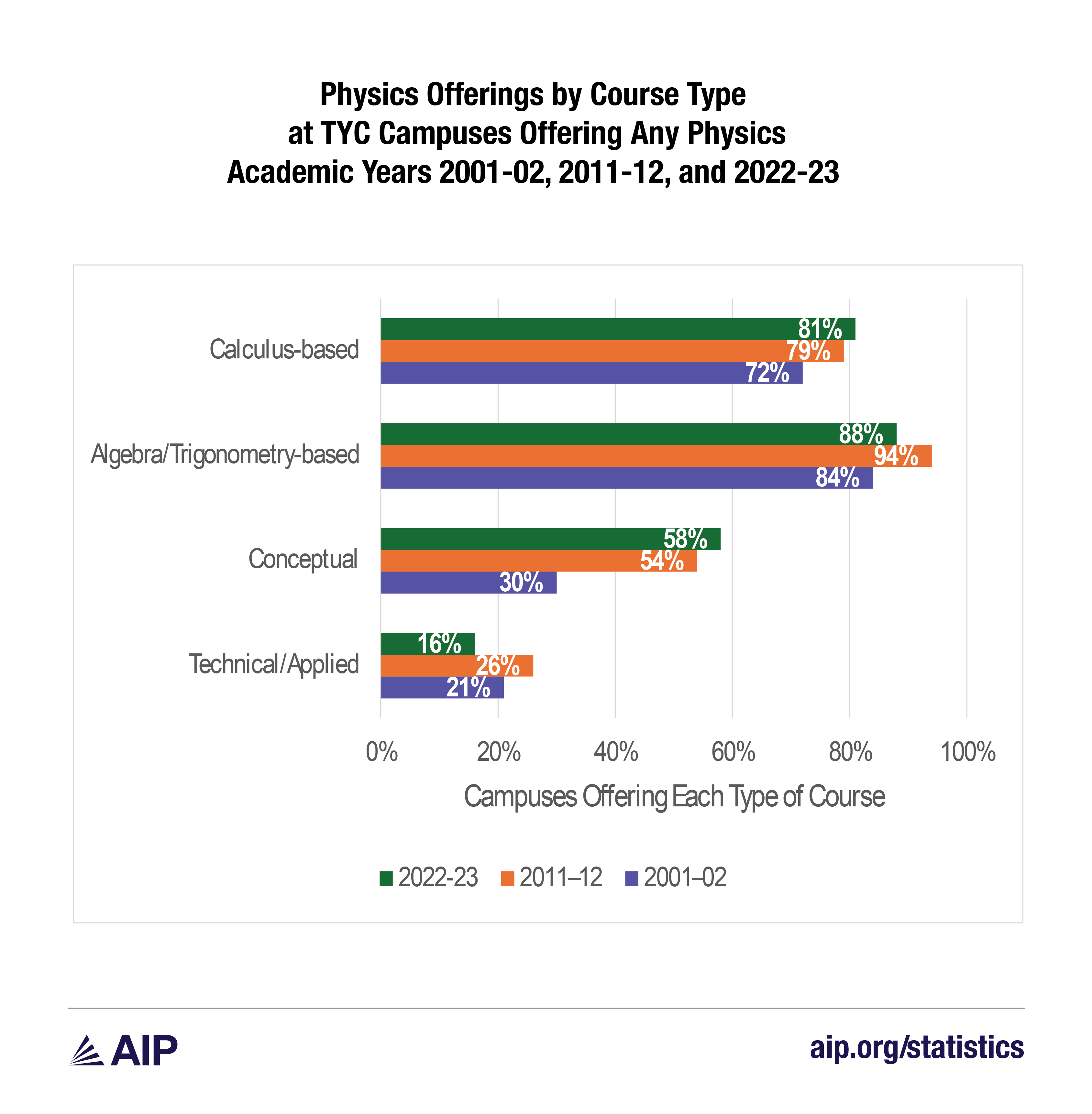
Figure 4 illustrates the increase in calculus-based physics enrollments, which now account for the largest share of TYC physics students. Algebra- and trigonometry-based physics and conceptual physics enrollments in TYCs declined since the last survey. There may have been changes in these physics enrollments that this 12-year interval did not capture. To further explore that, we will look at physics enrollments at four-year institutions.
Figure 4

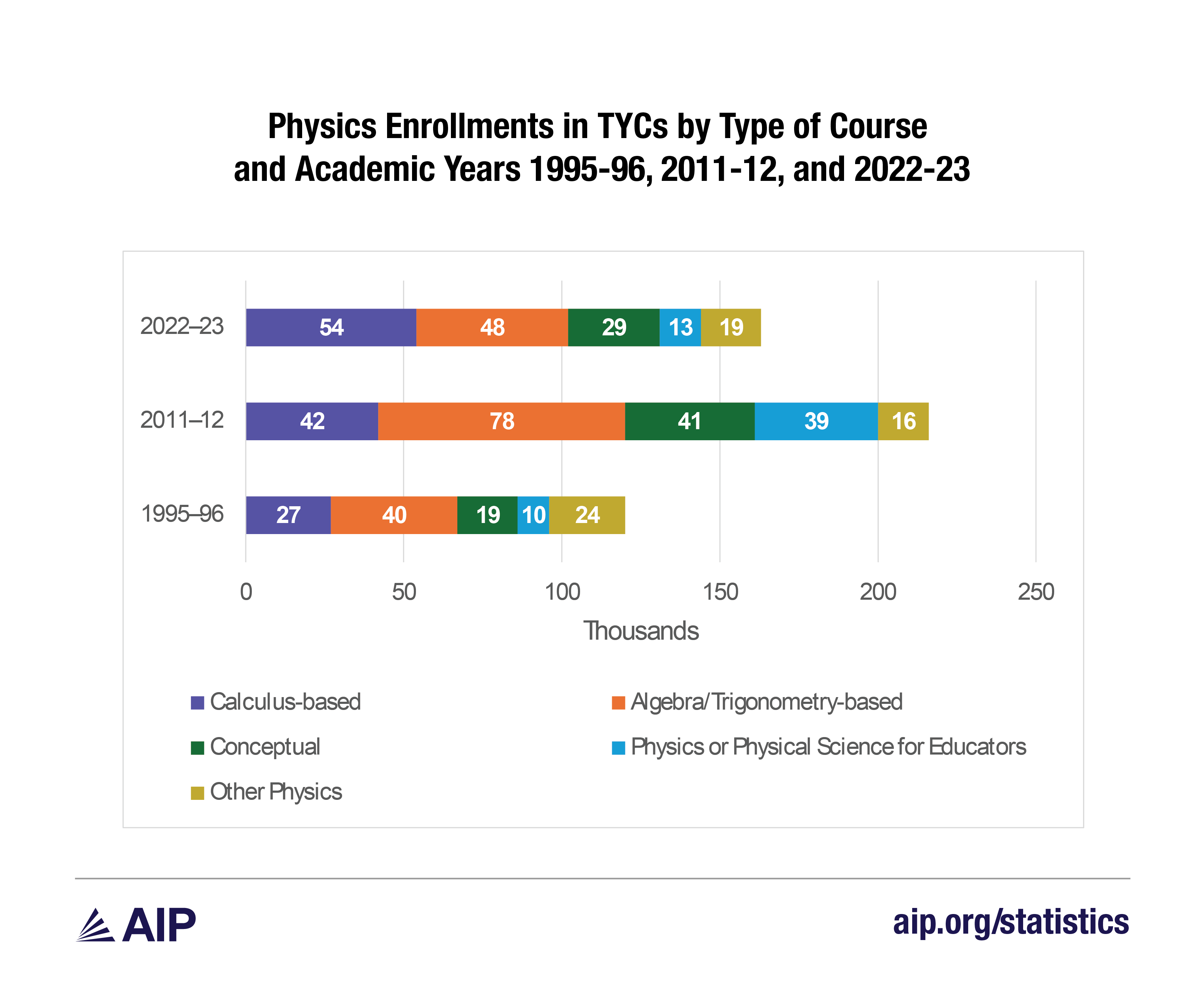
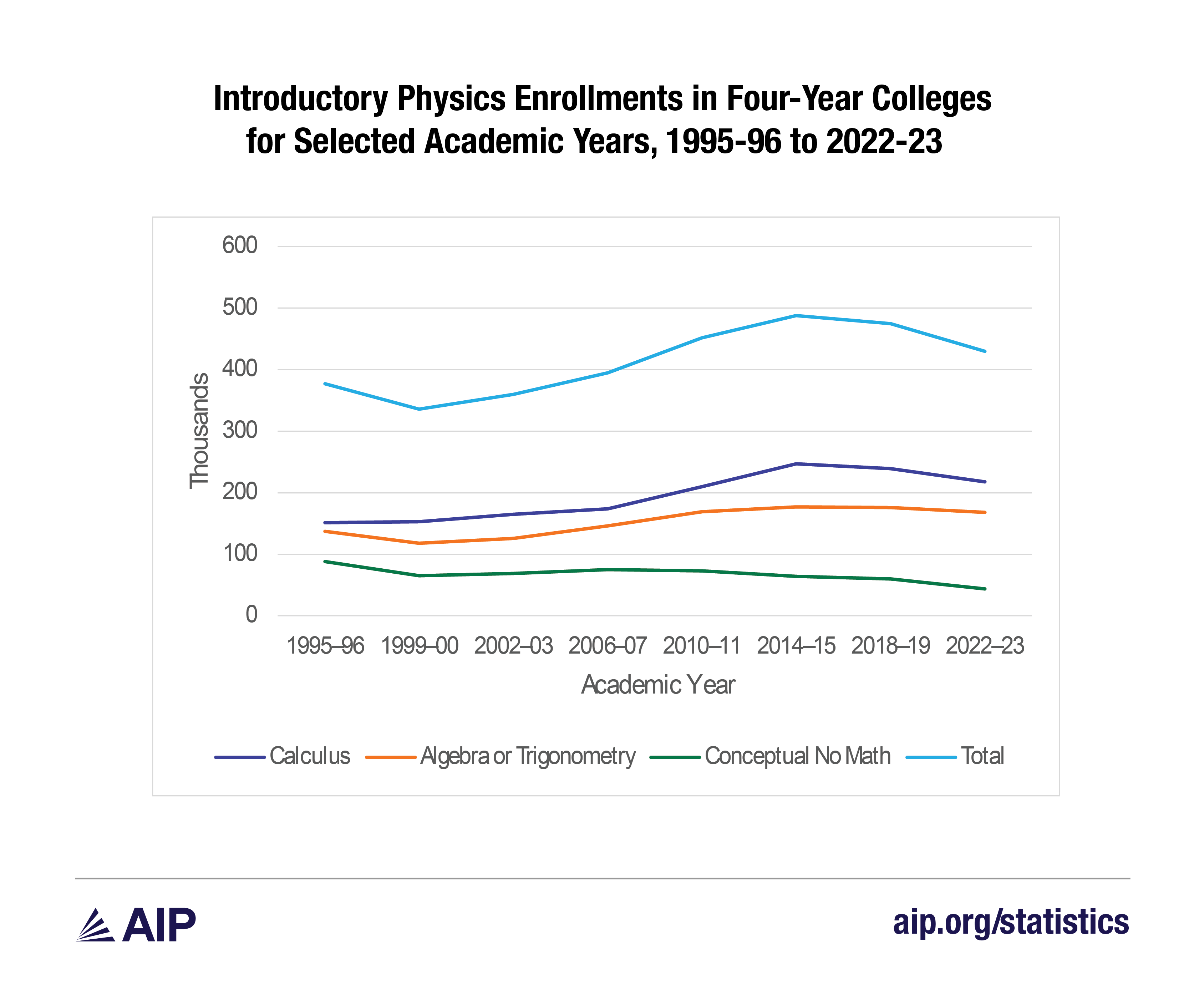
Figure 5 shows the total course enrollments for physics classes at four-year colleges; the variation in enrollments at TYCs might give a hint of what happened to TYC physics enrollments between the two most recent surveys. The physics enrollments in four-year colleges peaked around 2014–15 and have declined since. Although TYC enrollments in calculus-based physics show a steady increase, there may be a decline in enrollments to mirror that of other types of physics classes.
Figure 5

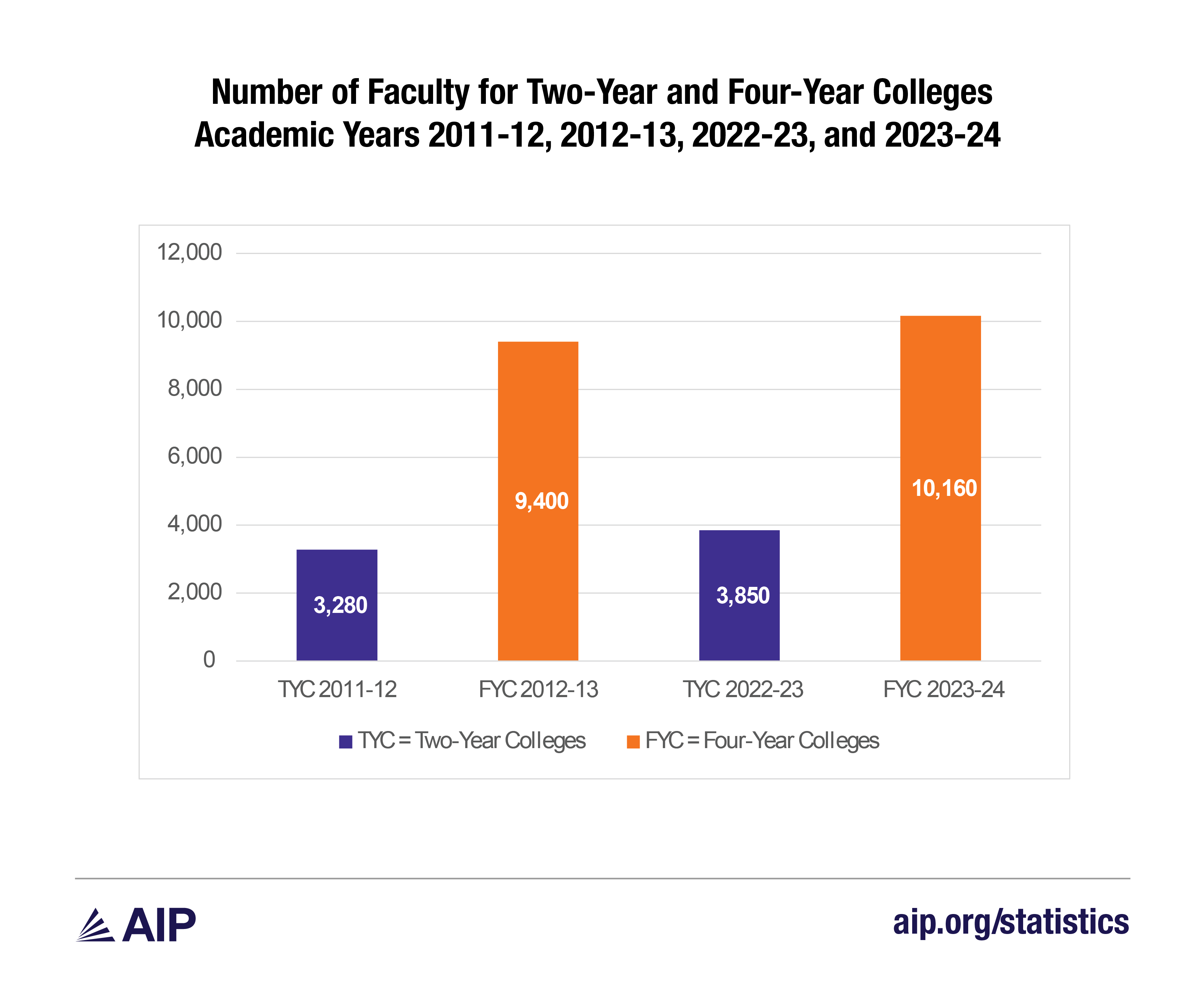
Enrollment trends are declining, but physics faculty continue to increase at the two-year and four-year colleges (Figure 6). TYC physics faculty increased from 3,280 in 2011–12 to 3,850 in 2022–23. Four-year college physics faculty climbed steadily from 9,400 in 2012–13 to 10,160 in 2023–24 (Porter, Oman, & Tyler, 2025) . The four-year college physics faculty data show an increase every two years, so it is likely two-year college physics faculty climbed steadily, too.
Figure 6

Conclusion
TYCs have served as the first step toward a physics major for 10 – 15% of the bachelor’s degree recipients over the last two decades. We are seeing a decline in enrollments at both TYC and four-year institutions. As physics enrollments decline and faculty numbers rise, monitoring the effects of student per faculty ratios on quality and sustainability can help institutions balance resources and maintain effective learning environments. Tracking four-year college enrollment and faculty counts every two years provides valuable context for interpreting TYC trends.
Survey Methodology
Working from a list of 1,061 TYCs from the Integrated Postsecondary Education Data System (IPEDS) that had at least 70% of their degrees awarded were associate degrees and awarded at least 25 associate degrees in 2021–2022, we found 1,126 campuses offering physics or astronomy in their 2022–23 class schedules through web searches. We found 779 department chair email addresses for these campuses. In April 2023, invitations to take part in the online survey were emailed to these campuses. One in five (21%) responded and provided email addresses to their physics and astronomy faculty. 2,352 physics and astronomy faculty were contacted to take part in the faculty survey. 23% responded (531 respondents).
References
White, S. and Chu, R. (2019). Nationwide Survey of High School Teachers.
White, S. and Chu, R. (2013). Physics Enrollments in Two-Year Colleges. Retrieved at https://www.aip.org/statistics/physics-enrollments-in-two-year-colleges
White, S., Chu, R., and Oman, J. (2025). Physics and Astronomy Faculty Members at Two-Year Colleges. Retrieved at https://www.aip.org/statistics/physics-and-astronomy-faculty-members-at-two-year-colleges
Pold, J. and Mulvey, P. (2024) Two-Year College Attendance by Highest Level of High School Physics Taken for Physics Bachelors Classes of 2021 and 2022 Combined. Retrieved at https://www.aip.org/statistics/physics-bachelors-influences-and-backgrounds
Pold, J. and Mulvey, P. (2025) Most Advanced High School Physics Course Taken. Retrieved at https://www.aip.org/statistics/physics-bachelors-two-year-colleges-as-a-starting-point
Porter, A.M., Oman, J., and Tyler, J. (2025). Estimated total number of full-time equivalent faculty members in physics departments by highest degree awarded, 2000-2024. Retrieved at https://www.aip.org/statistics/the-state-of-the-academic-workforce-in-physics-and-astronomy-2000-2024


